Showing posts with label Cape Horn. Show all posts

Ushuaia, Argentina: the End of the World


It is not the end of the world yet

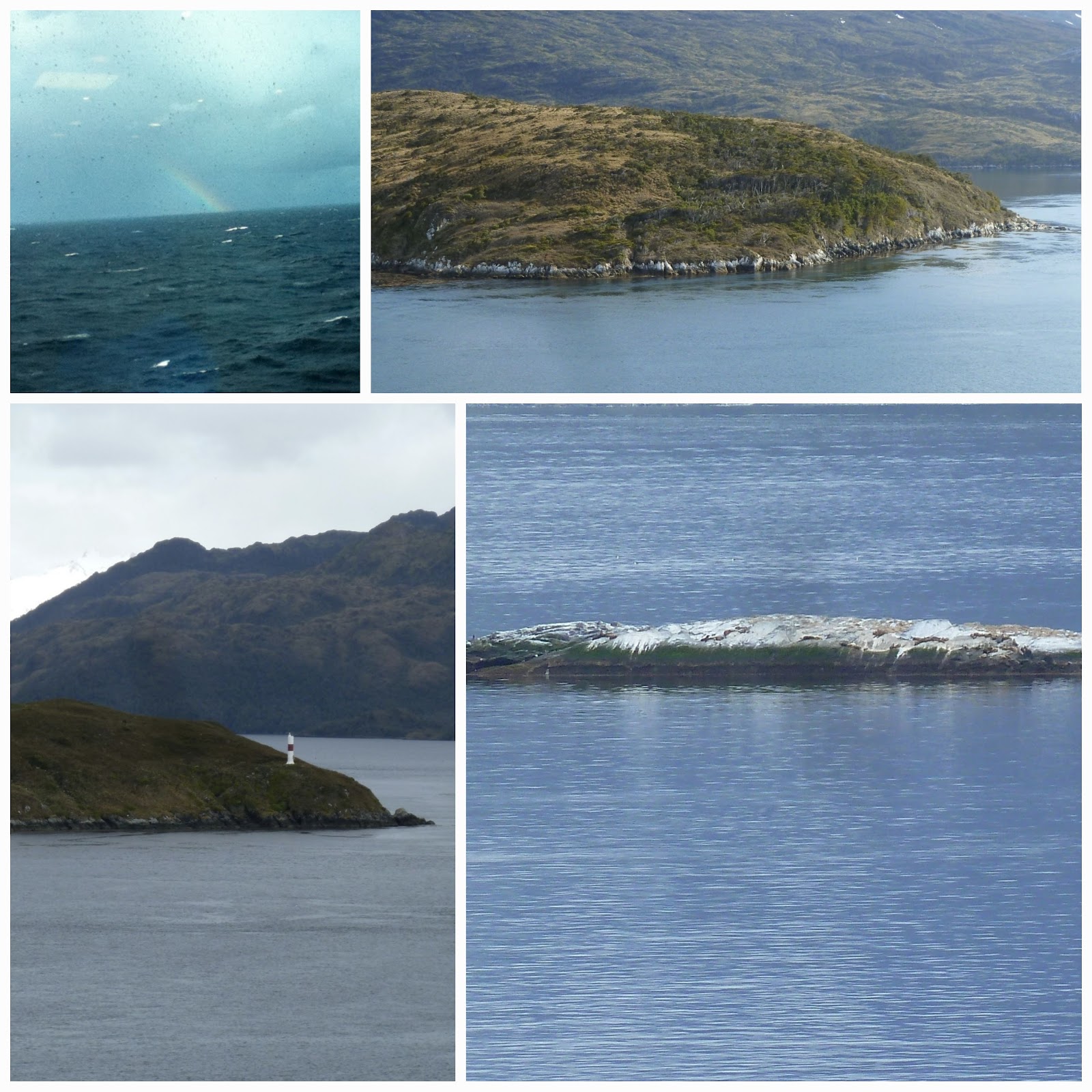
We are in the waters around Chilean Patagonia, somewhere in the Straits of Magellan, on Christmas day. It starts gloomy and rainy. The glaciers and the waterfalls seem mystically far away. The area supposedly  teeming with marine life, which were Darwin's focus as he sailed down the straits, seems lifeless. Not an albatross, not a sea lion, not a seal, not a dolphin. Disappointing.  But suddenly a light house appears and then a rainbow. There is a subdued tone. Sea lions are sunning on rocks. Penguins parade along the shores. All is well. 
Arguably all about location and size

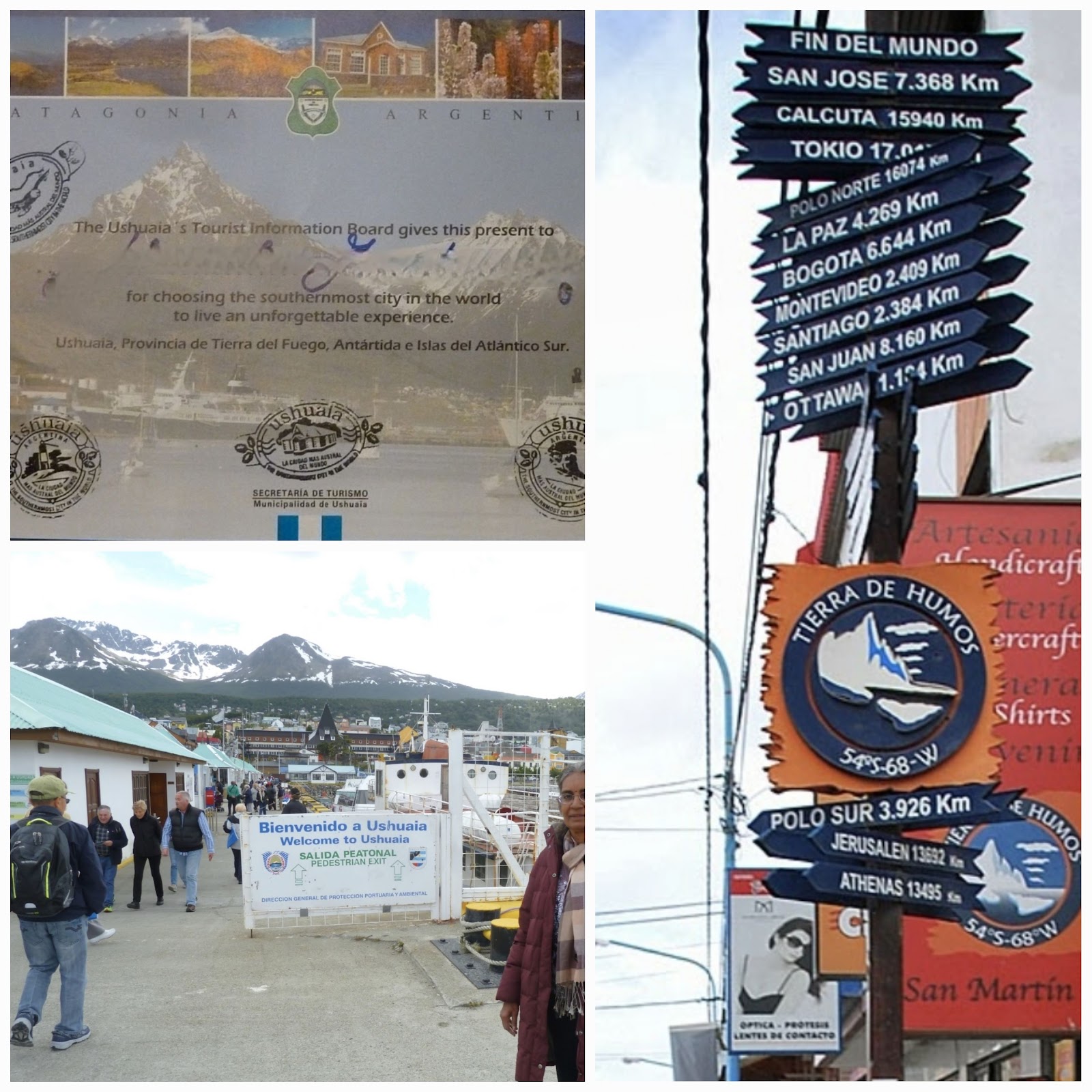
Ushuaia (pronounced oo-swy-ah) is the capital of the province of Tierra del Fuego, in Southern Argentina, with a population of 80,000. It's ‘near’ Cape Horn where the mighty Atlantic and the Pacific Oceans meet at the southern tip of South America.  It lies between Chile and Argentina, ensconced between the Andes mountains in the North and the Beagle Channel in the South. This is the closest settlement to the South Pole. It is the starting point for Antarctic cruises. 

Okay, not so fast. There is an island further down south but since its population is diminutive (only 3000) it is considered a village, and, therefore,  does not count! Hence, Ushuaia continues to be the world's southernmost town. And, they do give you a certificate with your name on it beautifully calligraphed.
A penal colony?: not quite

History has it that, in the late 19th century,the native Yamana population dwindled alarmingly due to epidemics. The Argentine government decided to boost the population. The least controversial way to do it would be to send political and high security prisoners from Buenos Aires and put them to hard labour within the prison walls and outside.  Thanks to them a railway track was built to transport timber (from the lush forests), rock and sand. By the beginning of the 20th century the prison had been expanded. The new town grew. 

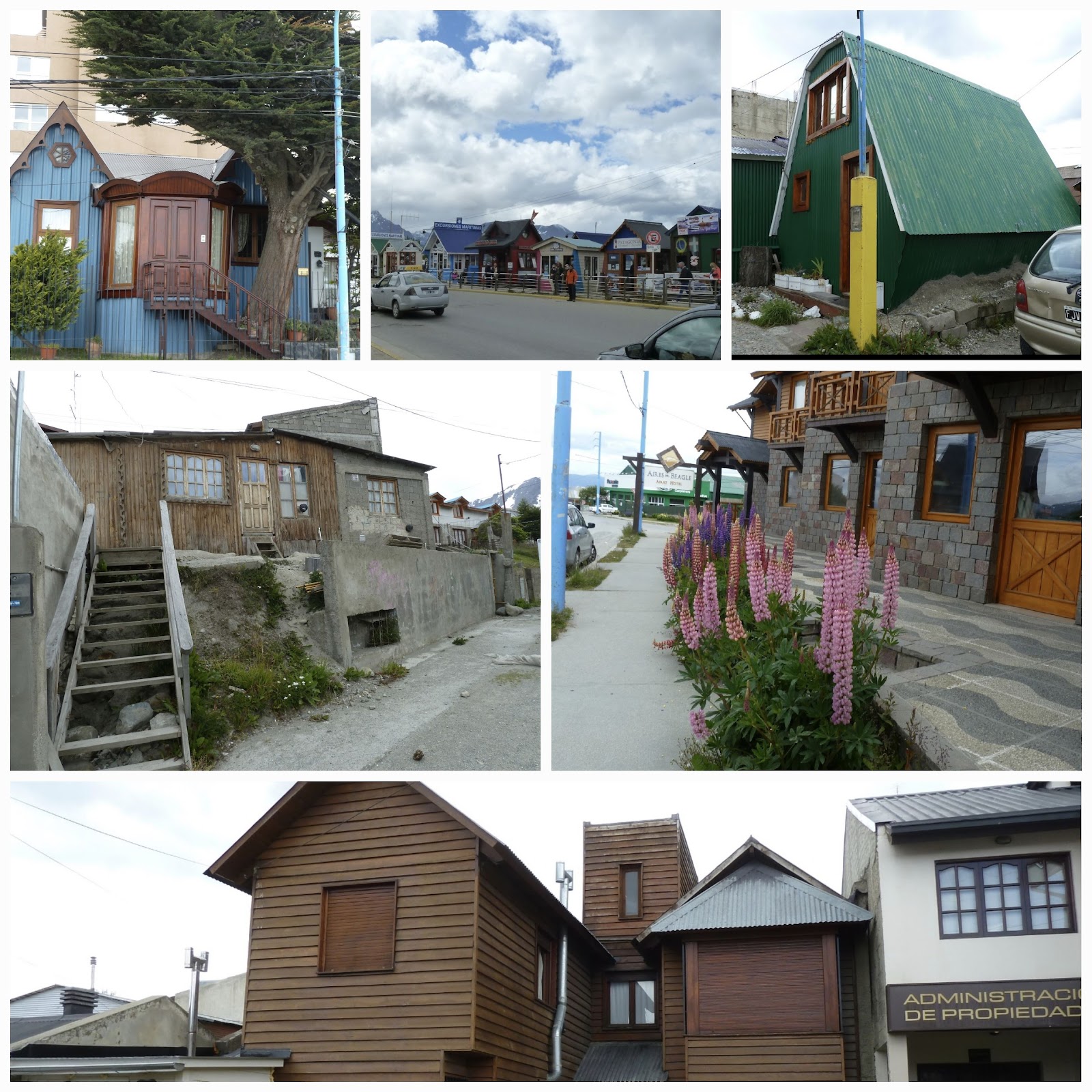
Today it has luxury hotels and concrete apartment blocks. Happily the scene is not boring for the town also has wooden shacks precariously balanced on piers so that they can be easily moved when necessary. Interspersed are old buildings and picture perfect houses with manicured gardens. The styles vary from Swiss Chalet to stark modern. The pastel colours and wooden structures help preserve the fishing village feel. There is no doubt that tourism plays a huge role in its economy.
Stand outs

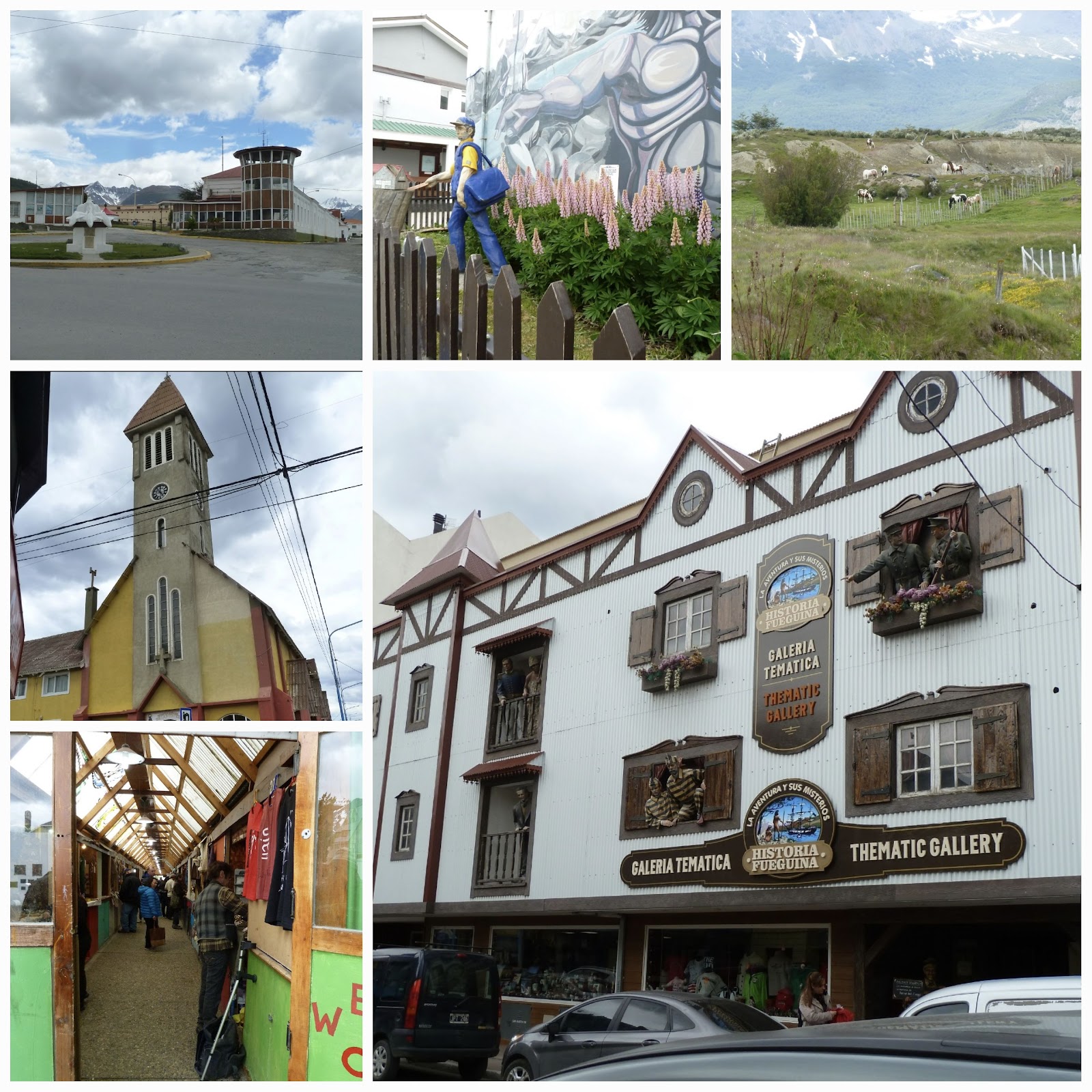
The streets are interesting to explore. The history  museum with figures beckoning through the windows is as attractive as the mural at the post office. The arcade sells local handicrafts
 Cold and colourful

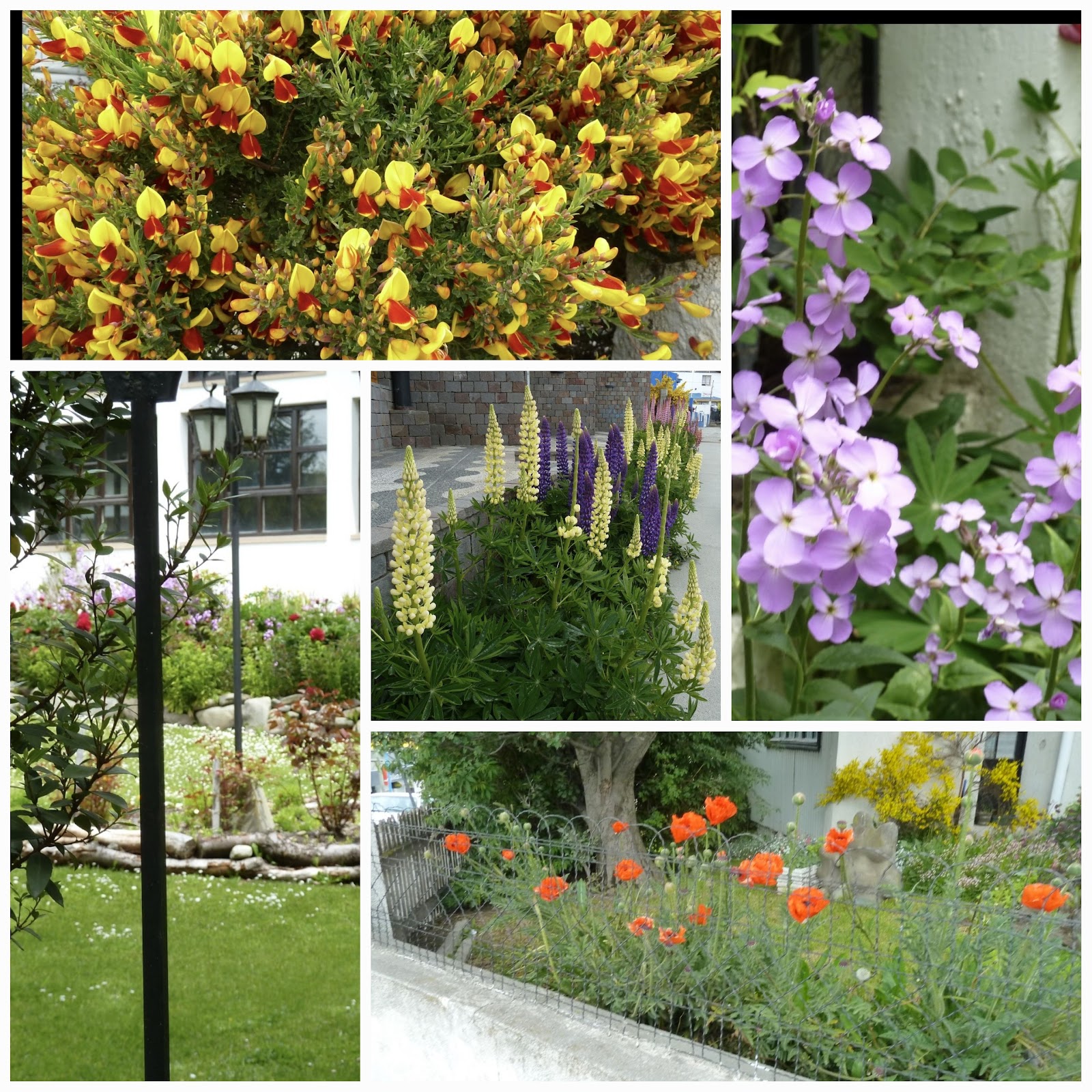
Temperatures always range  between 1 and 10° because of the latitude. No surprise,for Antarctica is only 5000 km away. But nature and clever landscap8ng adds bold colours to an enchanting atmosphere. 
A picture of tranquility

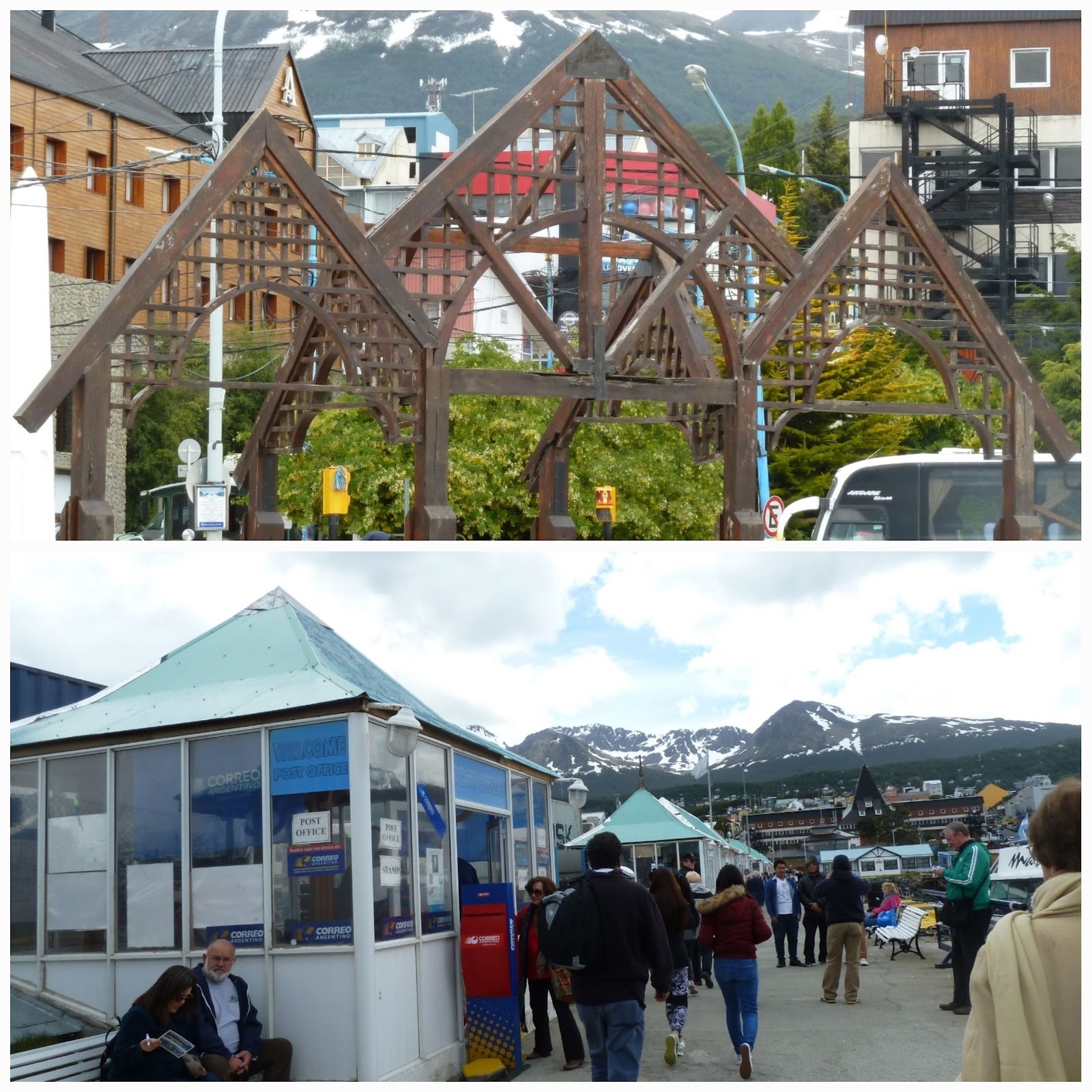
At sundown the landscape takes on a subdued, sensual tone; everything feels seamlessly connected. We are ready to leave with a certificate. Others have postcards mailed from the southernmost address.
Mystical Cape Horn

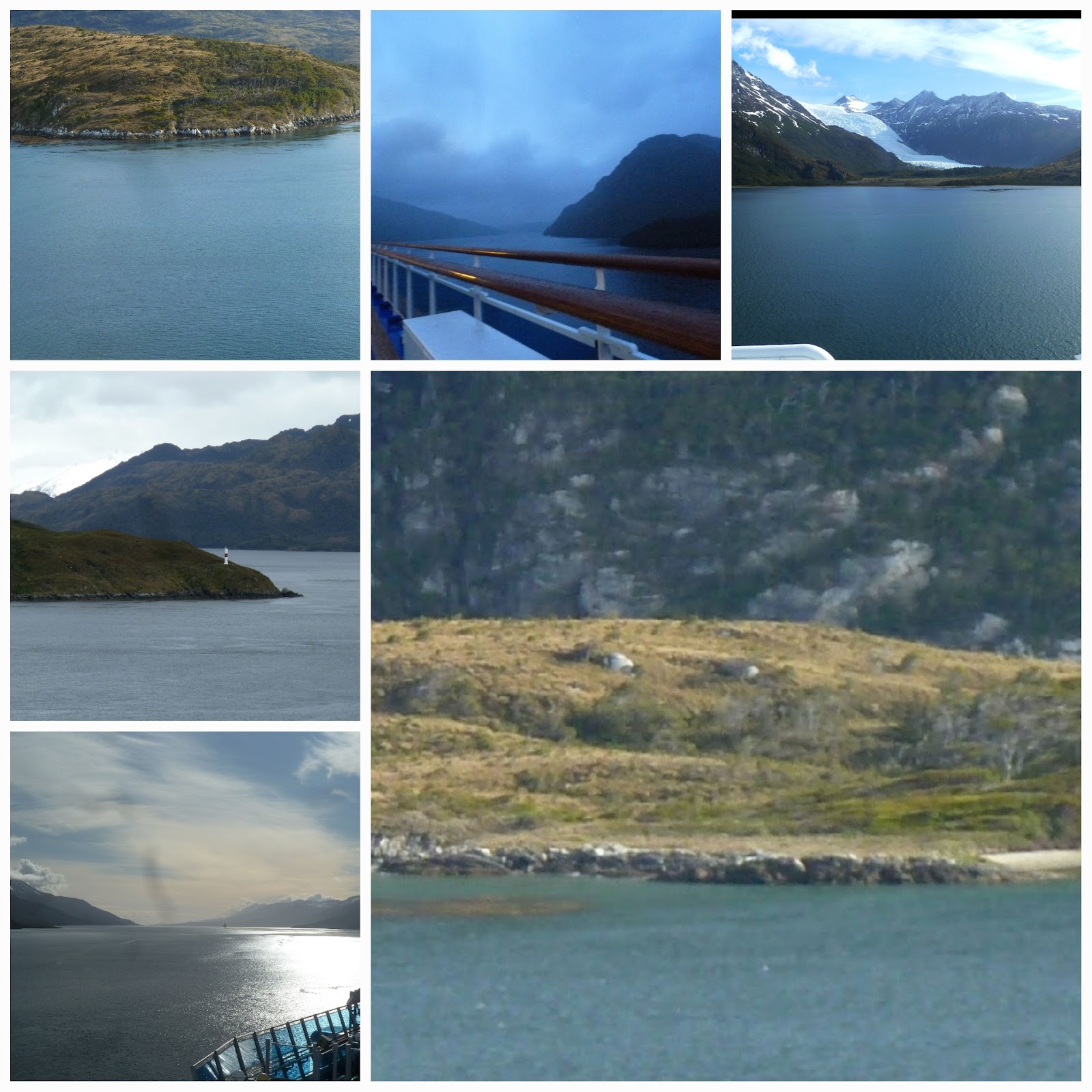
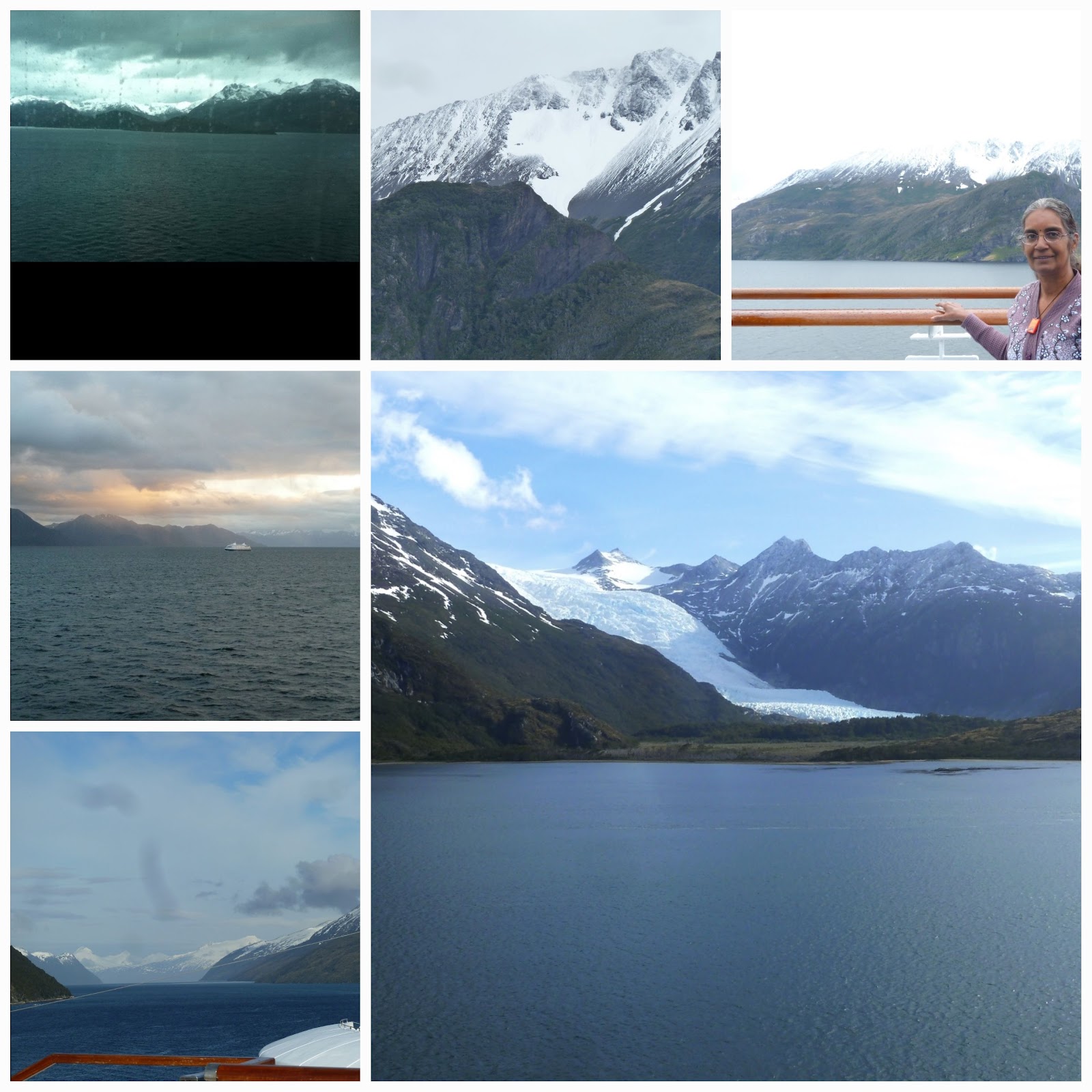
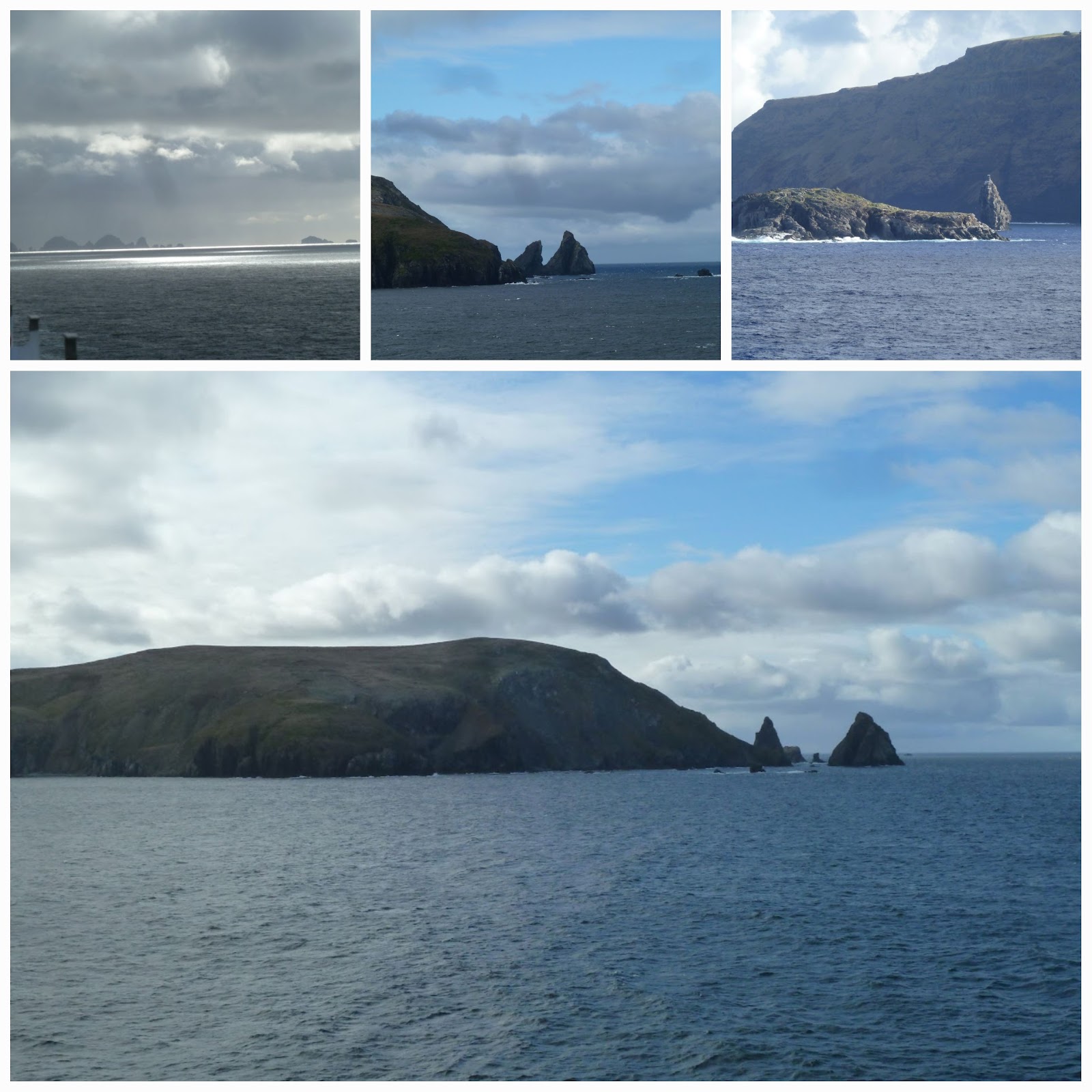
Back On The Beagle Channel we sail around Cape Horn, the Tierra del Fuego archipelago, in the wake of Ferdinand Magellan's sea route that led to trade between Asia and The Americas before the opening of the Panama Canal. We are very lucky indeed to have calm seas for more often than not the meeting point of the Atlantic and the Pacific is turbulent and rambunctious making it a graveyard for ships in the days of yore. 

The Falkland Islands/ Islas Malvinas: as remote as can be

Admiration for brave explorers at the ‘end of the earth’

It is December. Having sailed down the long long coast of Chile taking in the views of snow clad mountains and glaciers, we pass through the Beagle Channel, named after Darwin's ship, with a rare treat to glimpses of wild marine life on the rocky crags in a primaeval environment near Punta Arenas, Argentina. We then sail the straits of Magellan, named after Ferdinand Magellan who rounded the perilous Cape Horn, located at the southernmost tip of South America. Before the Panama canal was opened this was the only trade route between East Asia and Europe, and which connected the East and West coasts of North America! The horn of Africa is where the Pacific and the Antarctic oceans crash tumultuously into each other, causing havoc to the clippers of yore. 1000s of sailors were lost in shipwrecks. 

We are the closest we would ever be to Antarctica. We have been blessed with calm seas.

Luck and fact: Port Stanley, The Falklands

We are headed towards Port Stanley. So far we have been lucky because the seas in this area are unpredictable. More than often ports are cancelled. Many of the crew have been on this route several times without ever being able to go ashore. Several of our cruise friends have experienced cancellations before. There are also conspiracy theories. Perhaps our shipping line has not paid port duties! Let's face the facts: Port Stanley has one of the worlds highest risks with unpredictable blustery winds and huge swells. The day before and after our visit ships could not get in at all. The calm sea allows for a gentle tender ride to the port.

One ship too many
We are not the only ship in the port. There is another. The ship's excursion buses are filling up. They are going to the penguin colonies. We have not planned anything. There is a local shuttle to the nearest penguin colony for $20 return. Really? For 7 km? Oh, and the long lines. This will not do. We hear of a few people planning to walk. 7 km return is doable depending on the terrain. Are we ready to walk? Why not explore the city first. It is quite small and within 30 mins we think we have seen it all. We have plenty of time. Why not walk to penguin cove? We could always take a ride back.

Comfort in company.
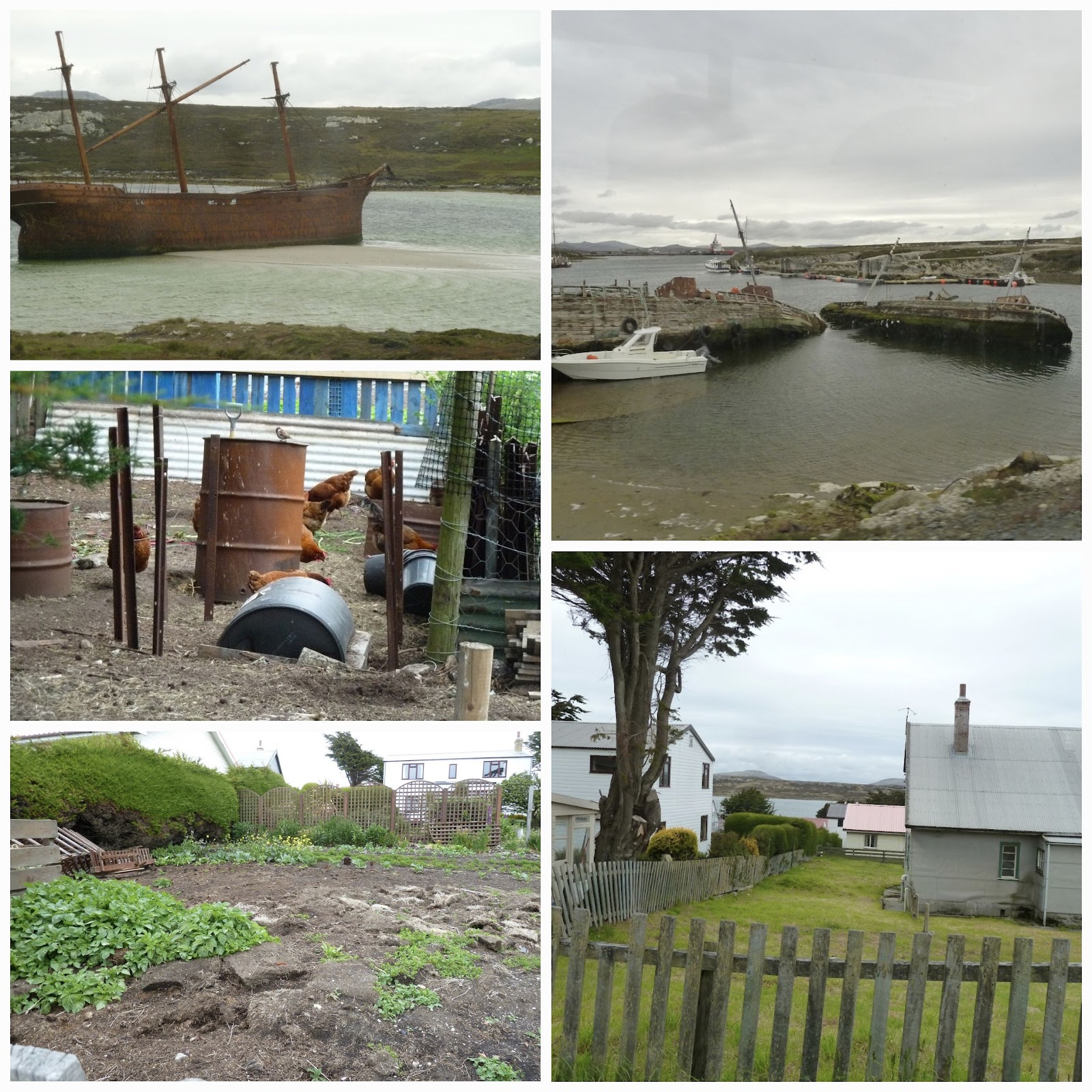
We check with a local for directions. He points the other way and we trust him. We have a rough idea. We pass by a residential area with fenced in homes, vegetable gardens, chicken coops, etc. There are a few trees here and there. And then? The road goes on and on. There must be walking trails. Sure enough we see a family with children in tow weave their way through the ground cover. They seem so sure. We follow them. The ground is springy. I am wondering if it is peat or bog. Will we get stuck? Will our calls for help be heard? The town seems so far away. We were actually walking on heath and gorse with their yellow flowers (the stuff that I had read about in Victorian novels but never actually thought I would experience). But an hour’s walking gives us some confidence about the terrain. We are careful to avoid the various nesting and squawking birds, like the rock albatross. We think we are almost there when we come across a bridge leading to a floating dock. It's scary walking along the mesh. It's all rather quiet. When we reach the container dock there's nary a soul. A sign board tells us that we are trespassing and so we quickly exit.

Now we do not have anyone to follow. We don't have a compass. We'll just have to wing it. We walk along the small bay with a wrecked ship. And then there are the hills. Will we see the bright blue sea over the next hump? We have walked more than an hour and we are exhausted. Our feet feel heavy. But, wait. We see people over the hills. Energised we plod forward. Three more hills to climb and we are on a gravel path lined with patches of tall wild grass leading to a ragged cliff overlooking a pristine beach. Penguin haven!
 

Penguin sanctuary: ensured by landmines!
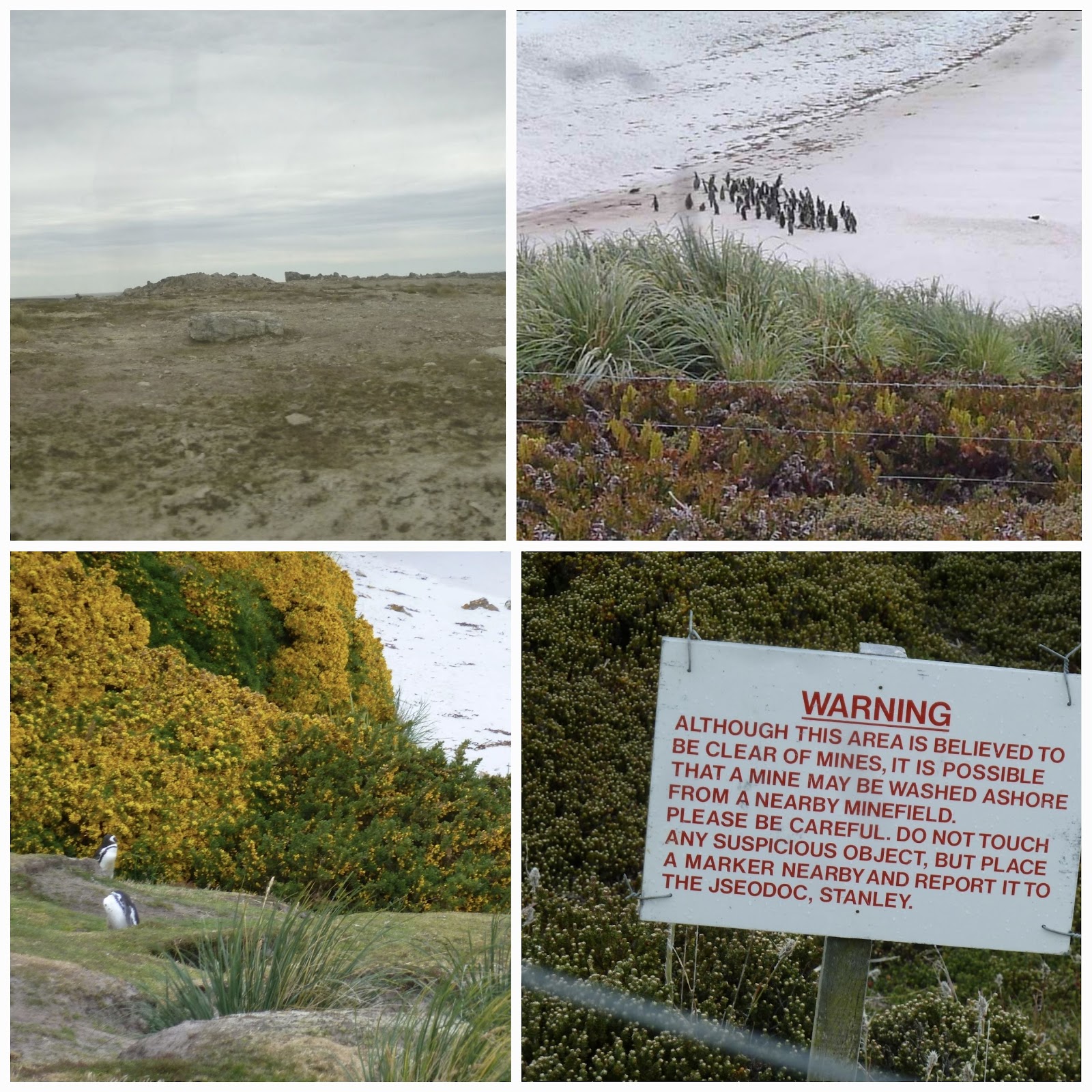
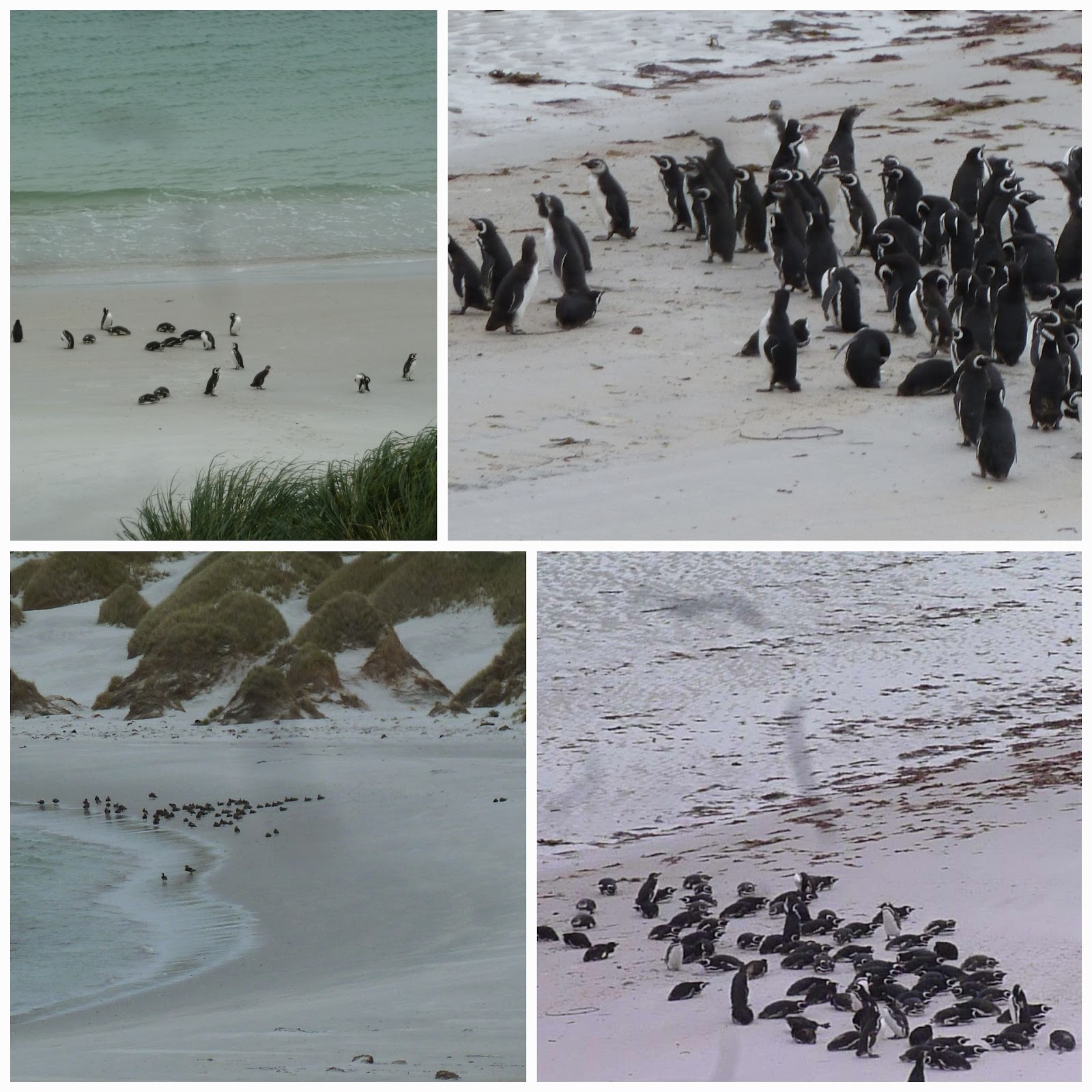
We are actually at the remote Gypsy Cove and the adjoining York Cove known for its quicksand. We see mostly Magellanic Penguins. Some are active either collecting pebbles for their nest or taking the chicks out for a swim. Some are standing with their wings fanned out, cooling themselves. Others seem to be lifeless, lying with their faces down on the sand. Also cooling off. They are simply relaxing without a care in the world. A sign board warns us not to go beyond the barbed wire. Landmines. 30,000 of them. Left behind in the 1982 war between Britain and Argentina. Wouldn't the penguins set them off? Apparently a penguin on a landmine is like a fly on a rock. Humans can set them off. Oddly,the penguins are protected by the very killer weapons. They deserve to be for they are no part of the war. 
Remoteness pays.
Blustery Winds 
The wind picks up. It's getting colder. Will the weather turn for the worse. Shouldn't we be leaving the island before the seas become dangerous for our tender to navigate? We have to wrench ourselves from the panorama and make our way back to port. 
Surprise! We are just in time for the shuttle bus. As we are about to pull out the wallet to pay for the trip we are quickly ushered into the bus. No-one bothers to ask for a ticket. Perhaps the assumption is that everyone has a return ticket. By the time we realise it we are already at the port. 

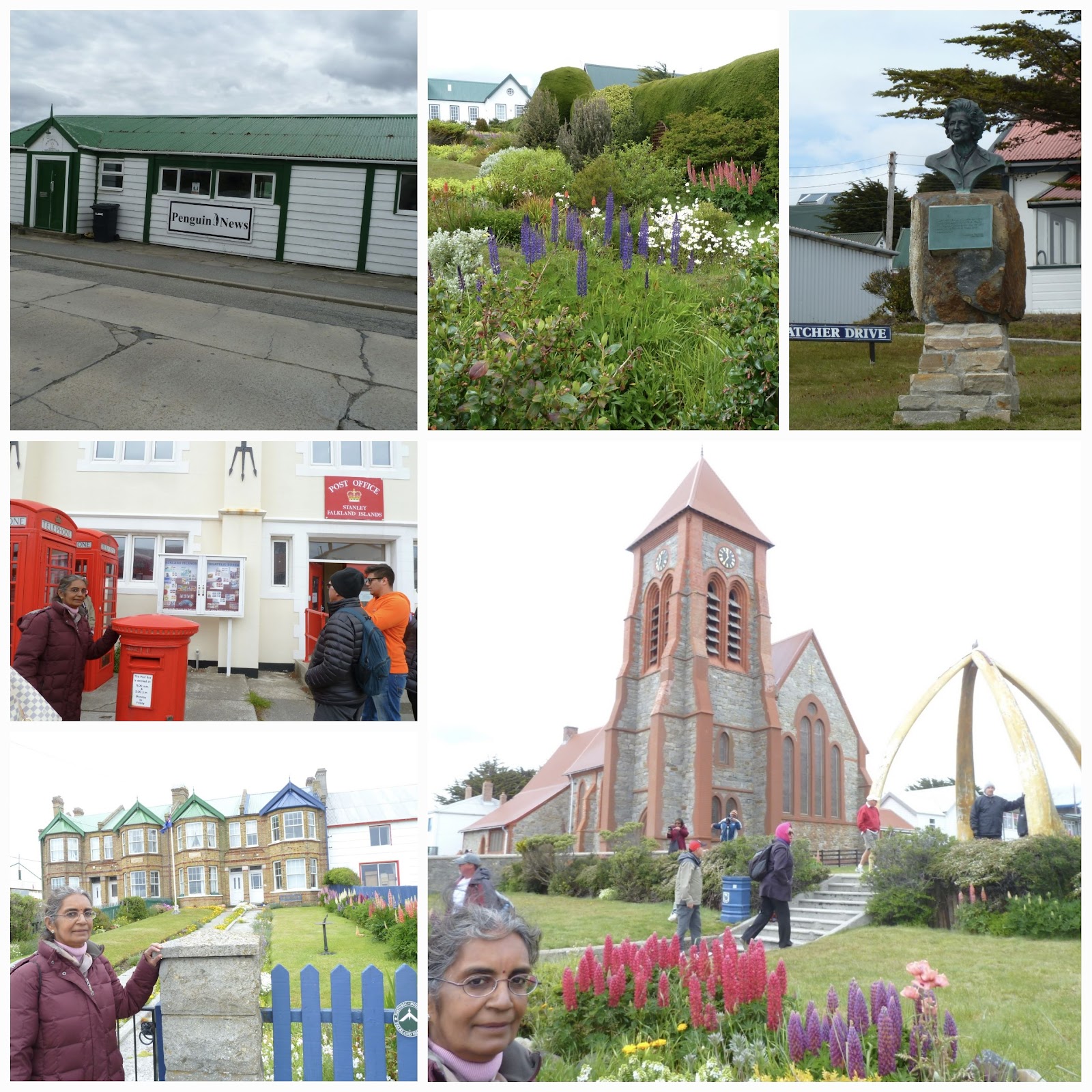
The wind has died down and there's still time before we tender back to the ship. And so we make good use of it to explore the very same places we had started off with in the morning. Starting with the bust of Margaret Thatcher, the esplanade takes us to the Whale bone structure at the 150 year old Church, a graveyard of hulls of more than 20 ships destroyed by torturous north atlantic storms, the museum, the government house, etc

Trivia:
Port Stanley is the only town on the Falkland Islands
Penguin News Weekly
Red phone booths, driving on the left are unmistakably British 
There is not a single ATM
Popular chain stores? None

Private beach: privileged penguins 
We've seen penguins in Philip Island's (Australia)Penguin Parade, where we sat on wooden bleachers at sunset awaiting the return of the penguins to their nest underneath our seats and also in Boulder Beach penguin Colony, near Cape Town. The African penguins here are protected by boulders. We walk along a boardwalk. But the penguins in Falkland Islands seem to have the most private beaches!


Ljubljana, Slovenia: medieval and modern charm

Jubilantly at Lyoo-blyah-nah ( that is how it is pronounced) On our way from Opatija, Croatia, to Maribor, Slovenia, we stop by Slovenia...

Follow by Email