Showing posts with label canary islands. Show all posts

San Cristóbal de La Laguna: yet another 'capital' of the Canary Islands

Complementary cities

San Cristobal,Tenerife, the historical and cultural capital is only a short ride away from  Santa Cruz, one of the pair of political capitals. We have two choices: "guaguas” (bus) or tram. The tram appeals to us. Getting a ticket is easy.

Are we already there…?

The cities are so close together that within a few minutes we see a significant building. It is the famed, elegant University San Cristobal de la Laguna, the oldest university in the archipelago.

Taking it from the square

We start at Conception Square, one of the city’s important squares and explore. We are surrounded by colourful buildings, pretty cottages and a multitude of cafes, restaurants and bars.The Church of the Immaculate Conception Looks unassuming but its interior is quite impressive. The top of its bell tower offers wonderful views of the city.

Built for the capital

La Laguna Cathedral with a stunning interior was built in the early 1900s. The Cathedral was built in La Laguna because at that time it was the capital of the Canary Islands. Its various architectural styles  include the  Neoclassical, Neo-Gothic and Baroque. It is considered to be one of the few Spanish Cathedrals of Art since it includes a huge collection of15th century beautiful, original religious paintings. The stained glass, the ornaments and the adornments in the side chapels are all astounding. Unsurprising as the cathedral’s interior houses a wide range of religious heritage . This includes a huge collection of beautiful original religious paintings from the 15th century to more recent times, stunning stained glass artwork, lovely side chapels with striking ornaments and a magnificent altarpiece. 

Changing facades due to ravages of time

The small Chapel of San Miguel was once meant to be a Mausoleum. 

It is interesting how the various parish buildings take on different facades on different sides. It's probably due to natural destruction and thence rebuilding.


World Heritage indeed.

As we approach the historic centre the colonial ambiance is unmistakable. The buildings that surround us are steeped in history. A stroll takes us past monasteries,  large mansions and modest houses with typically colourful doors and windows as well as balconies. The streets are long and often end in large open spaces with several statues. 


The mansions and monasteries open into lush landscaped courtyards with typical Canarian Island home designs. They are decorated with wooden balconies, timber columns and a majestic garden with a fountain in the middle.

Messes on the swamp

But the layout of the old city seems to be haphazard. The city was built on the site of a shallow lake (laguna) or swamp that was drained. The first inhabitants were mostly soldiers. They could build anywhere in the public space within the fortified area. 

But when it resulted in a mess, a plan based on Da Vinci's plan for the city of Imole was adapted by the then ruler. Also, at this time,  all buildings in cane were ordered to be destroyed for, naturally they were fire hazards.

The city lost its importance when the capital was transferred to Santa Cruz in the 18th century. Tourism is now flourishing.
Oasis of peace: Arrecife, Lancerote, Spain

 Browns and greens: au natural

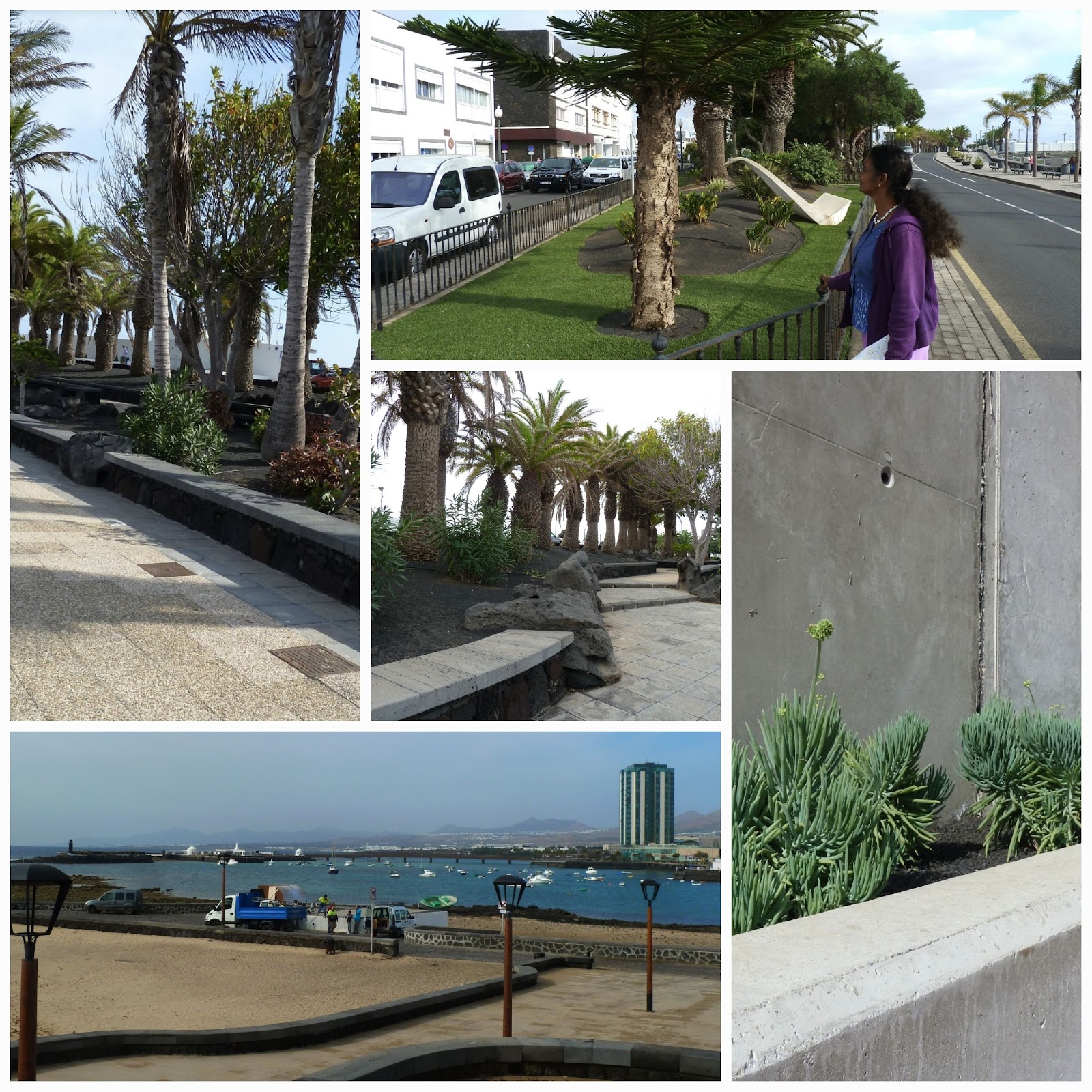
We are in the capital of Lanzarote, one of the Canary Islands off the coast of Morocco.  The capital of the island, Arrecife, has a mostly white skyline with humble buildings.. But when we get off the ship, we step onto the marina with enticing restaurants and shops. As we walk towards the city we are greeted by rich browns and greens. We are crunching on black lava or walking volcanic stone paths. It is a pleasurable lesson on how the soil is formed from the weathering and erosion of volcanic ash and rock. After all we are on the land of 1000 volcanoes, the last eruption being in the 1700s.The fertile soil supports vivid green succulents creating an altogether aesthetically pleasing atmosphere.  


White and blue: simple elegance


The next colour that stands out against the distinctive white backdrop is the electric blue of the lagoon. Appropriately referred to as the puddle not only because of its size and little shoals, it  is salt water, dotted with colourful moored boats. Called “Charco de San Ginés”, historically,this little saltwater lagoon  was used as a port, both to protect fishing boats and for the entry of goods. The walk and the lagoon itself are just as beautiful as the houses around it.  Ships plying between Spain and Latin America in the Conquistador era used the port as a stop off. It remains the centre of the old city. 

The scene gets rustic when we come across a busy gentleman. On the steps leading into the lagoon a fisherman scales and guts his small catch oblivious to spectators. We wonder if the fish are destined for the family or for a restaurant.


Forts 

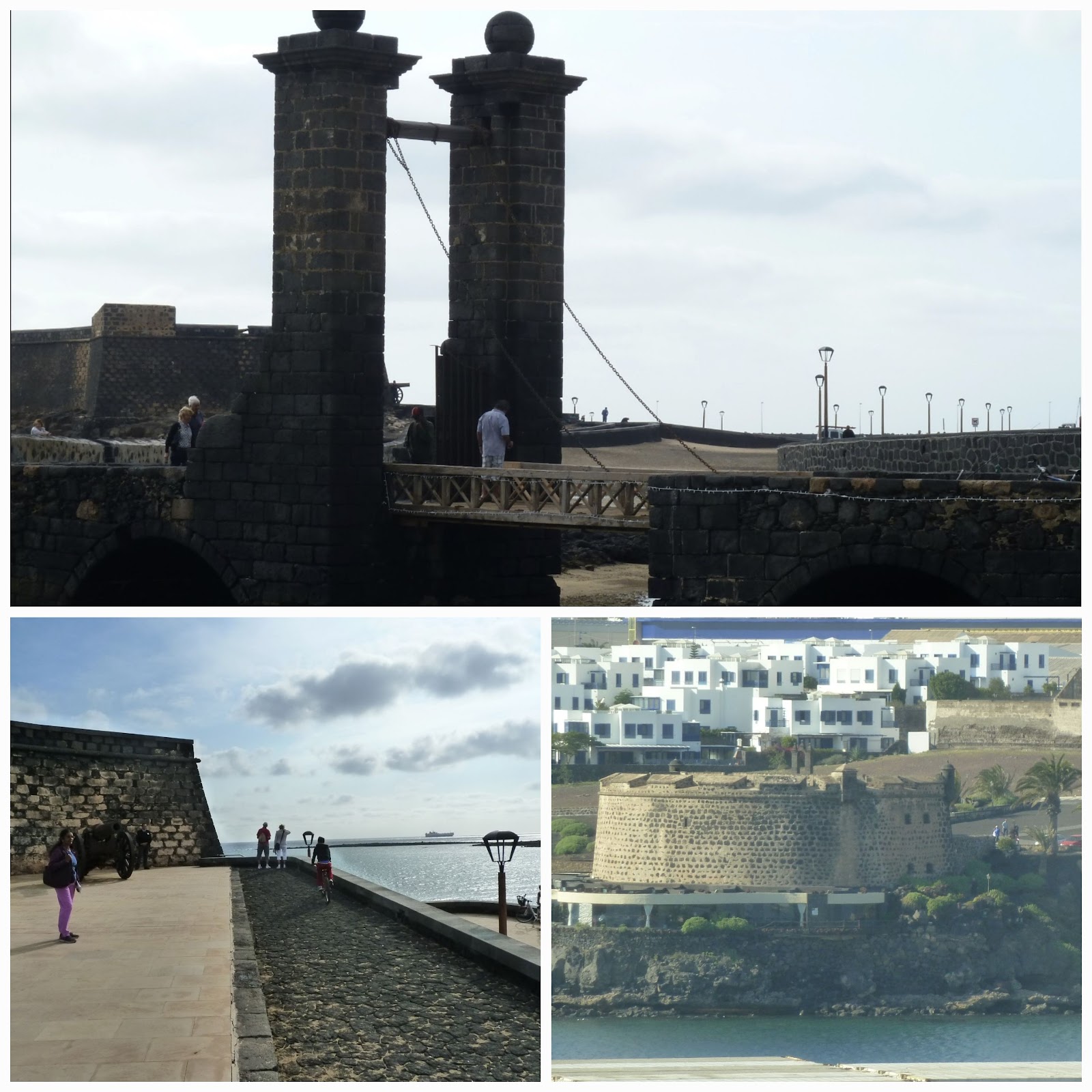
Being an easily accessible  port the city must have been prone to attacks. That explains the imposing castles and the fortifications. The castle closest to the port,Castillo de San Jose, now houses contemporary art.

Another interesting castle is on an island. The promenade takes us to Castillo de San Gabriel which is connected to the city by an imposing stone drawbridge called Puente de las Bolas, the bridge of the balls, perhaps because of the balls sitting atop the pillars.


Shopping street

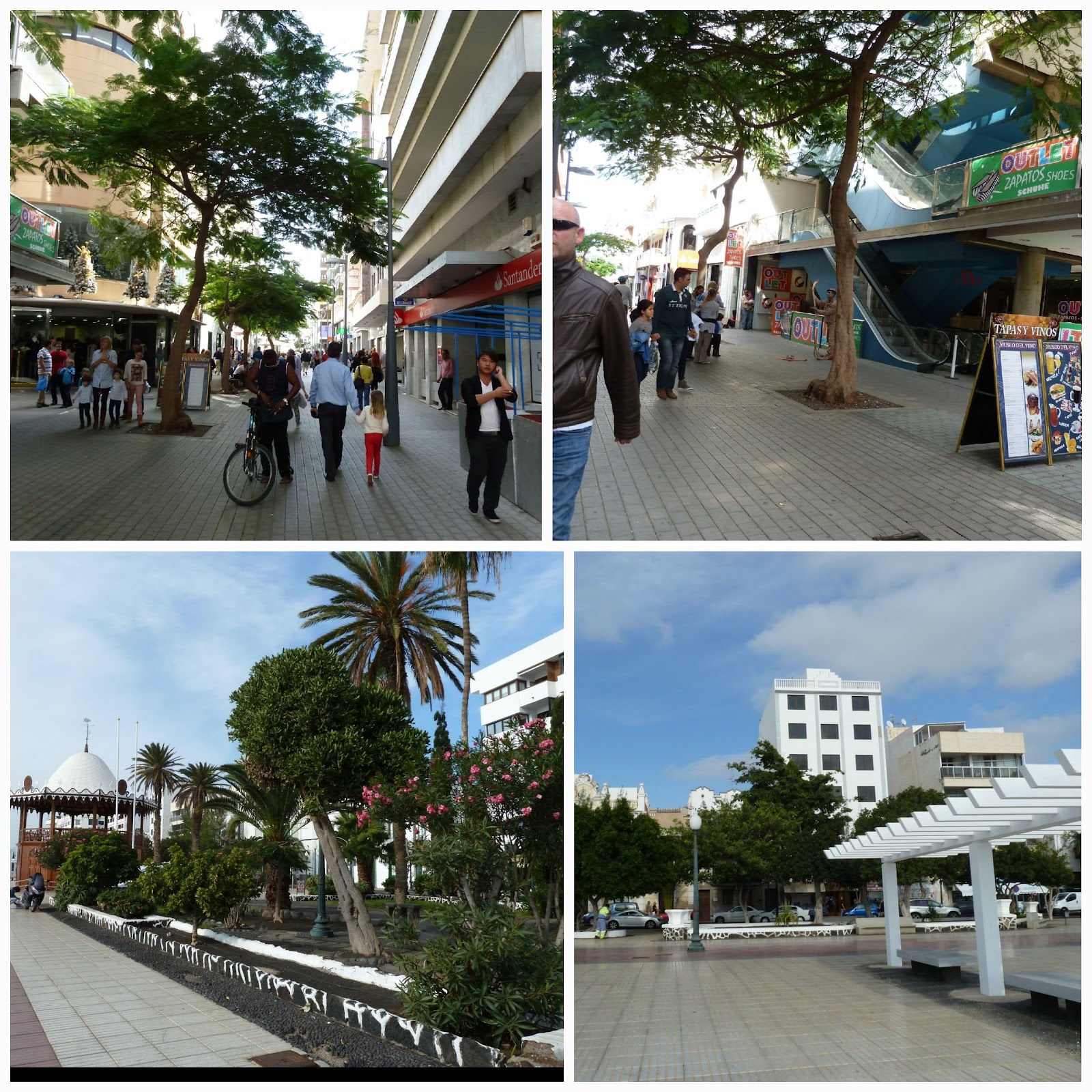
To see more of the city's vibes we veer off into a very busy pedestrian only street called Calle León y Castillo. It is lined  with humble shops and chain stores (selling souvenirs and local products) as well as banks and pharmacies.

The Promenade takes us along a band stand towards the newest hotel, also the tallest in Arrecife. The vicinity reflects the modern architecture but at the same time reflecting the white theme .


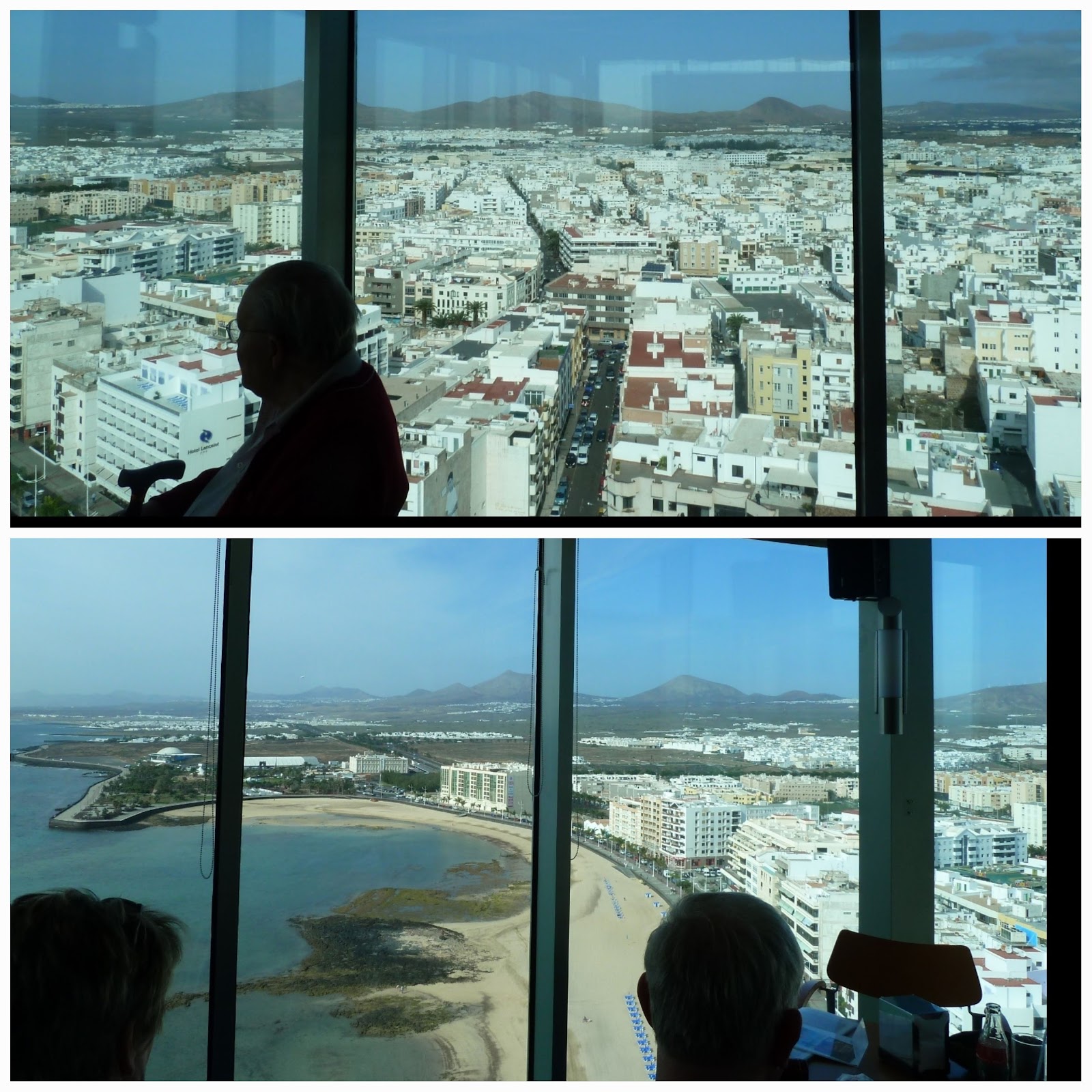
Had we continued in the same direction we would have arrived at El Reducto Beach. The warm day that it was, dipping the toes in the sea would have been an Aah! moment, but we walk into the hotel, take the elevator to the topmost floor and have a bird's eye view of Arrecife.

Not all white: traditional architecture


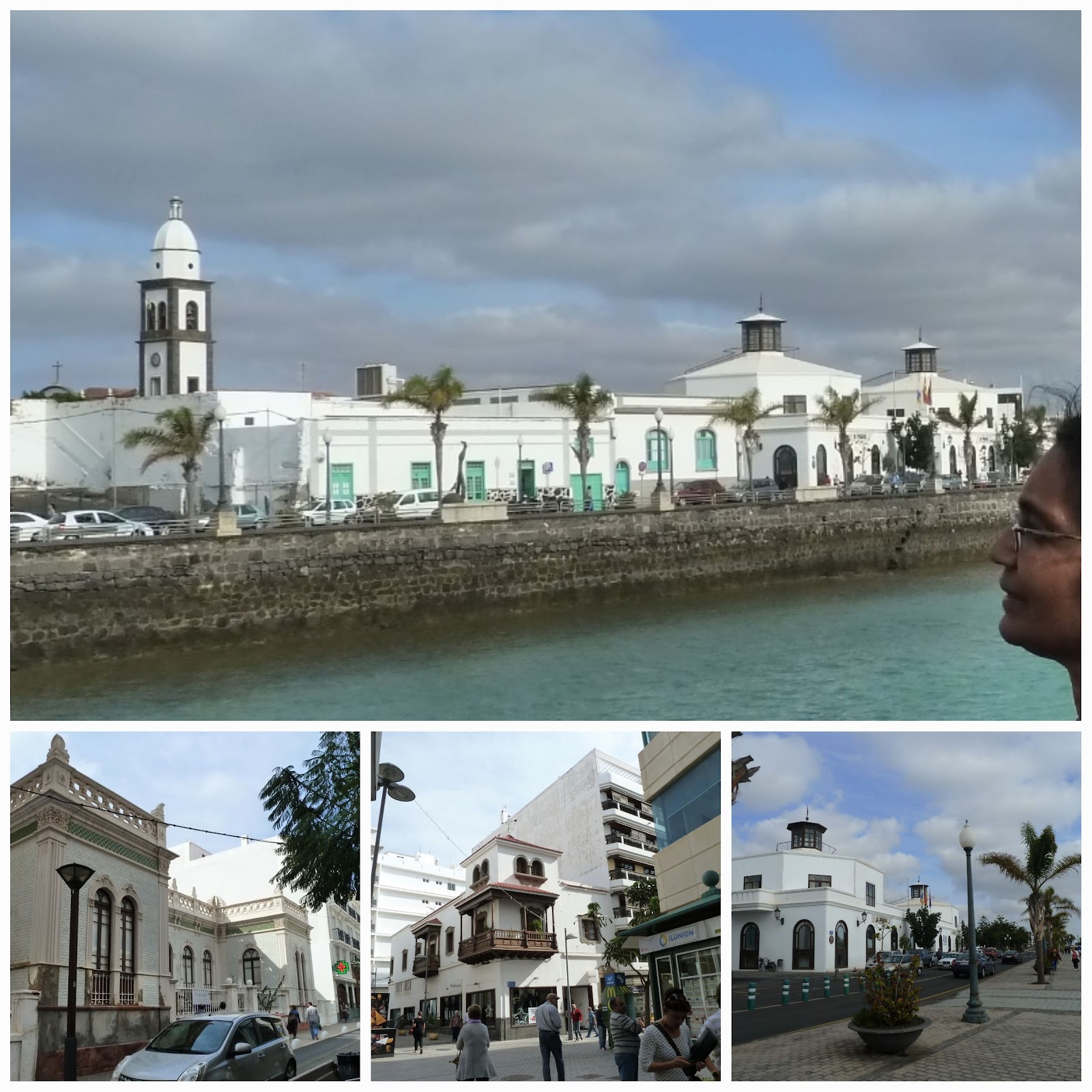
We trace back into the old city for the historic and cultural vibe. Not every building is stark white. Contrasting wood elements and masonry delineate some of the traditional buildings. The typical Spanish building is yellow because the outer walls are decorated with yellow ceramic tiles. Its attraction is not only the colour but also because it was the site of the Lanzarote Council that protects the rights of children. 

In the town square, known as the oasis of peace, stands the  main church of Saint Genesis, dominating the skyline. The 16th century building is characterized by its square bell tower topped by an octagonal cupola. Part of the ambiance could be attributed to its whitewashed walls, highlighted and edged by dark volcanic stone. It is now a history museum.

Contributing to the cultural vibe even furthur is the Recova Municipal where restaurants serve authentic food  and craft shops abound.


Trivia:

Growth:

In the early 18th century the humble port had an estimated population of 73.. Within a 100 years it rose to 3000. It continued to grow and prosper in the 20th century, becoming a town and then a city all due to maritime transport.


Which came first? Bird or island.

It is the bird that is named after the islands.Did the bird come first or the islands’ name? The latter.


The Tricity of Poland: Gdansk, Sopot and Gdynia (1)

Respect for order The parking area where our driver (refer to an earlier blog about Conflict and Cohesion) drops us off reflects Gdańsk'...

Follow by Email