Full of promise
A heavy complimentary breakfast at Tirana has prepared us for a 2 1/2 hour journey to Ohrid, North Macedonia. I'm a little excited about Macedonia because of its association with Alexander the Great.
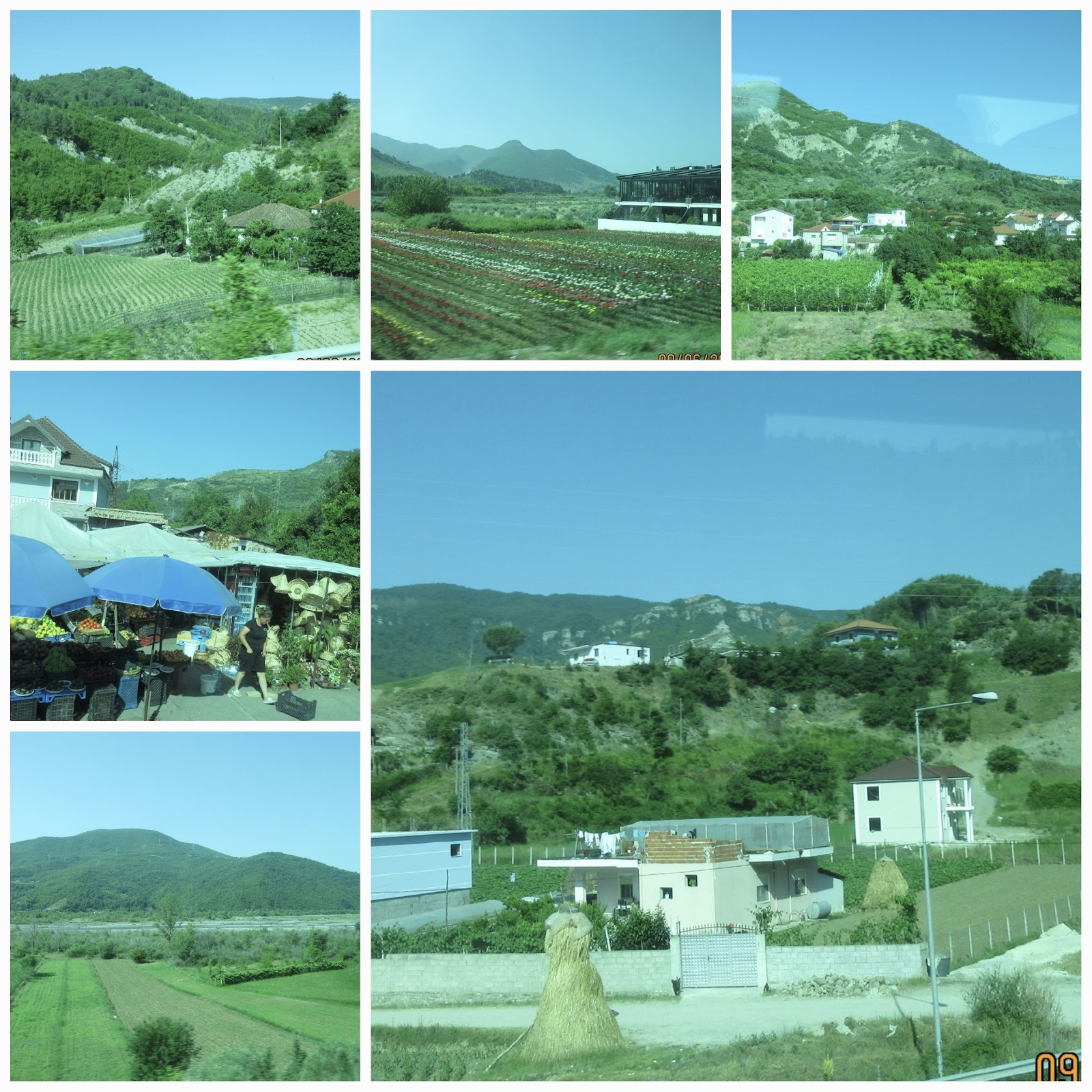
The winding, undulating route keeps my eyes peeled on the stunning landscape dotted with villages, interspersed with furrows of flowering plants, vegetables, and the conical haystacks topped with a knot. We are surrounded by mountains cradling villages in its folds. Most of the way a river rushes along our side, pouring over weirs. And then there are tall bridges straddling hills. They support old railway tracks. Plus there are tunnels.
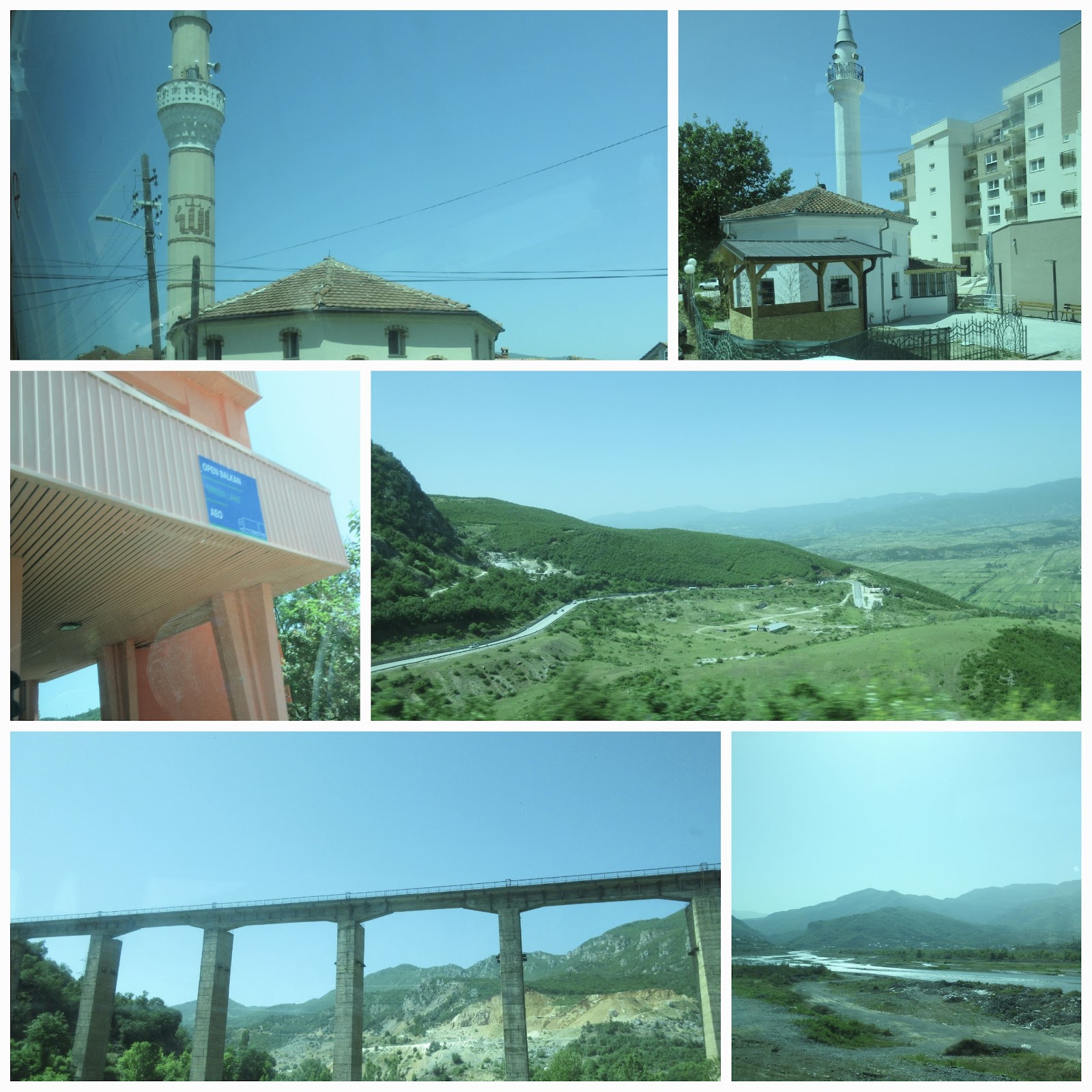
Unpretentious mosques stand out simply because of their minarets. Along the way we stop for a toilet break. We are surrounded by flowers..
Border checkpoint with a ‘tip’
Our tour leader has warned us that a 2 to 3 hour addition to our journey might be inevitable. It depends on the number of vehicles at the crossing. Sometimes officers would require that every bus passenger alight and meet an officer face to face. At other times the passports are collected by the driver who then passes them on to the officer. God forbid that an Albanian bus is ahead of us. It gets a thorough check which may take up to an hour for each bus.
We are lucky. Our driver hands over some bottled water to the concerned person and we are off in about 30 mins.
Well fed lake extraordinaire
Almost within an hour we are in Ohrid, the lake for which it is named and of which we have had tantalizing blue glimpses along our route. The lake shimmering in the heat has more than meets the eye with respect to nature and culture.
It shares the shoreline with Albania, its neighbouring country, on whose side is the town called Progdac. Over there are the springs of Drilon, one of the sources that feed the lake. Modest tributaries fill it in from the north. Hear this! It is mainly fed by underground streams in the east which trickle through from Lake Prespa 10 km away and at a higher altitude.
We are not done yet! The water at the surface of Lake Ohrid moves mostly in a counter-clockwise direction along the shore. Why? The force of the wind and the rotation of the Earth.
Here's more. It is one of Europe's deepest and oldest lakes, with a unique aquatic ecosystem, with more than 200 endemic species.
Unearthing the city on the slopes
Our local guide tells us that our tour of the old quarters begins with some gradual steps and slightly steeper slopes nearer the top. We brace ourselves for the hike. As we step into the old world we are confronted by a well preserved massive stone tower at Lower Gate. It is part of Samuel's Fortress. We step onto an iron grid over a cellar like depression. Apparently, in ancient and medieval times, before visitors could enter the gates they had to ‘ditch’ all they were carrying into the trench, to be reprieved later. Reason: to prevent contamination and to protect denizens from spreadable diseases. The entrants were also quarantined.
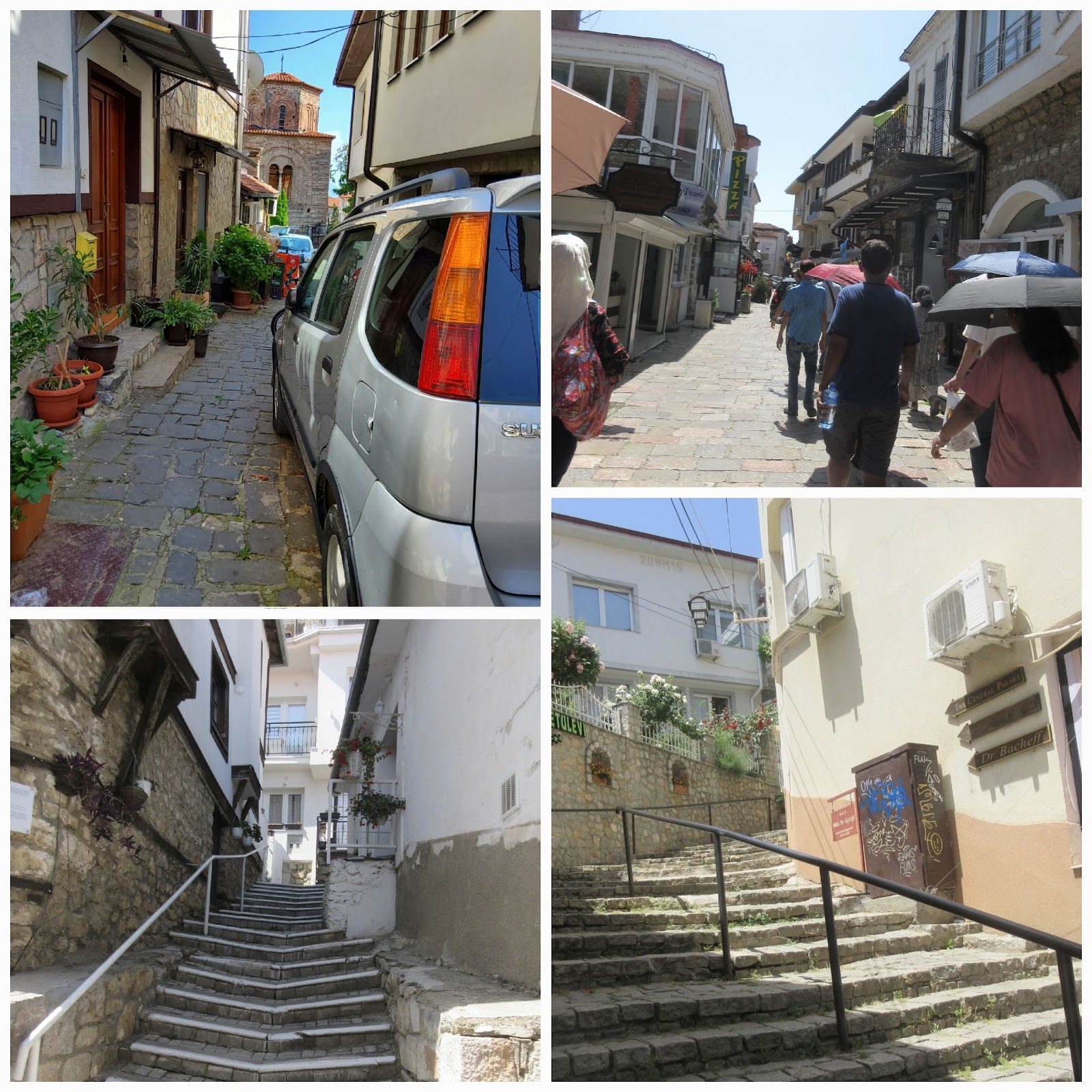
It is easy to get lost in the labyrinthine alleys, charming narrow cobblestoned or flagstone streets lined with cafes, artisan shops (including a workshop that taught old fashioned paper making), stone walls, tiled roofs, etc.
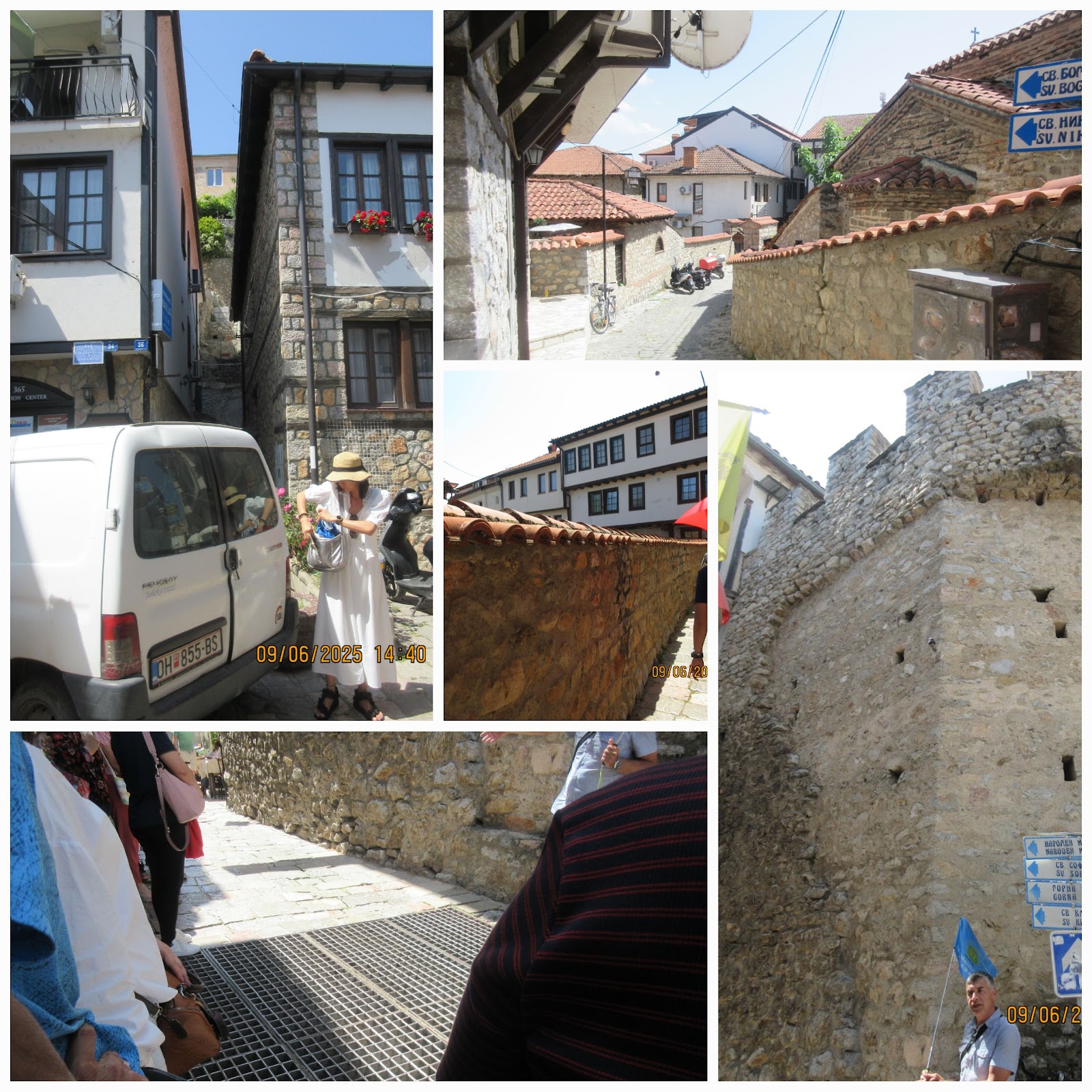
It gets a little steeper as we ascend. History has it that when the Turks came to Ohrid, they restricted the town’s Christian population to the walled area which enclosed the steep slopes of the city. That is why parts of the town feel a little claustrophobic, with tall houses towering over narrow alleyways, throwing shadows.
It is also the reason why all the churches are found in this part of town.
Architectural elements
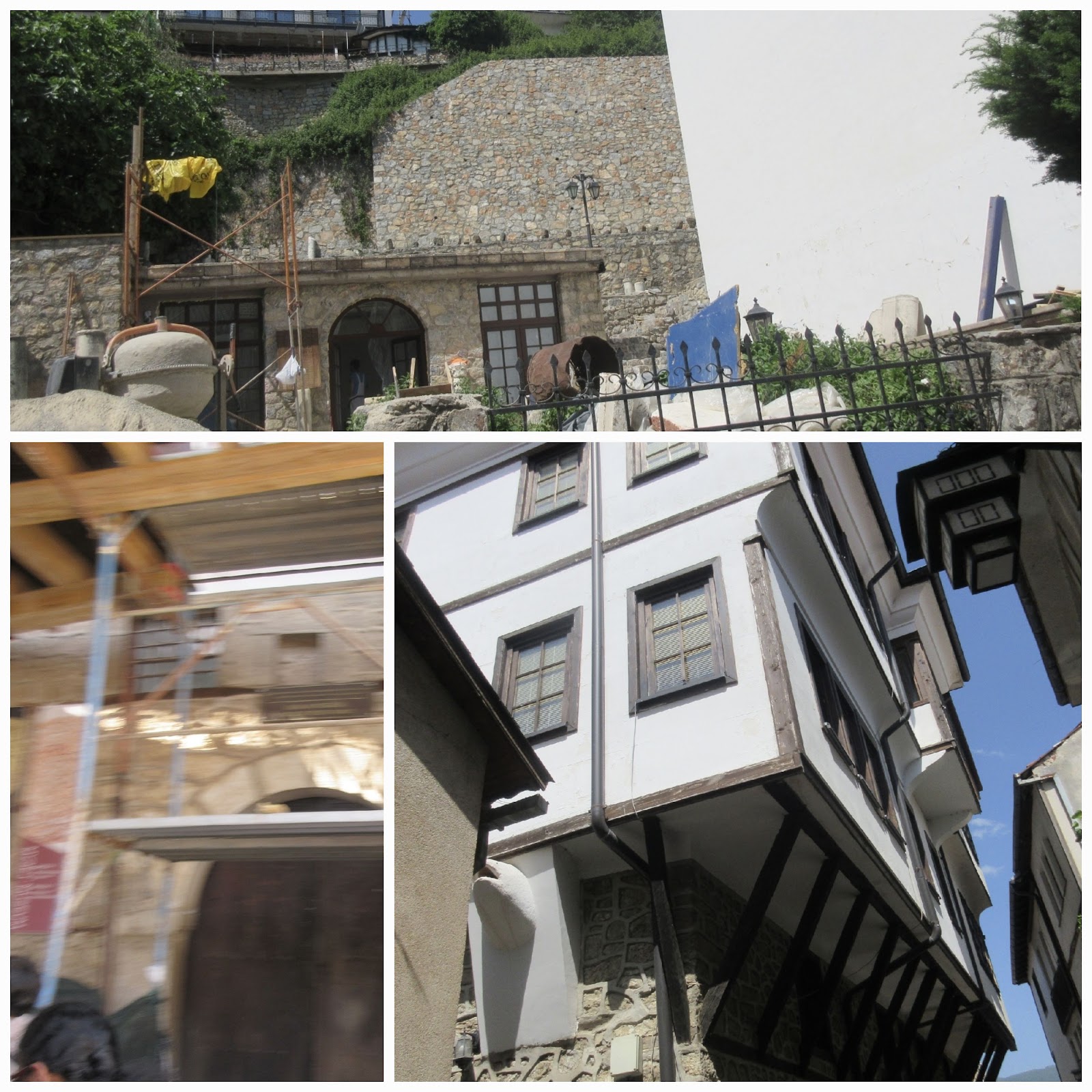
We walk by the Robev Family House, built in the 1900s, a significant example of a traditional Ottoman Turkish house and therefore an architecturally important cultural monument. It is now an Archaeological Museum,
Blame it on constraints
Looking above in the narrow streets we see distinctive Ohrid architecture. Each upper storey protrudes over the lower to add to the living area as the family expands over the generations. The bottom floor is stone while the upper floors are constructed of wood. Wall niches and wood carved ornaments decorate the ceilings.
Strict rebuilding codes
Do you want to own a house here? You are bound by law to adhere to traditional styles, and use appropriate material consistent with the historical context. Most importantly if renovation uncovers artefacts you may not be allowed to build over it!
‘Jerusalem of the Balkans’: spiritual hub
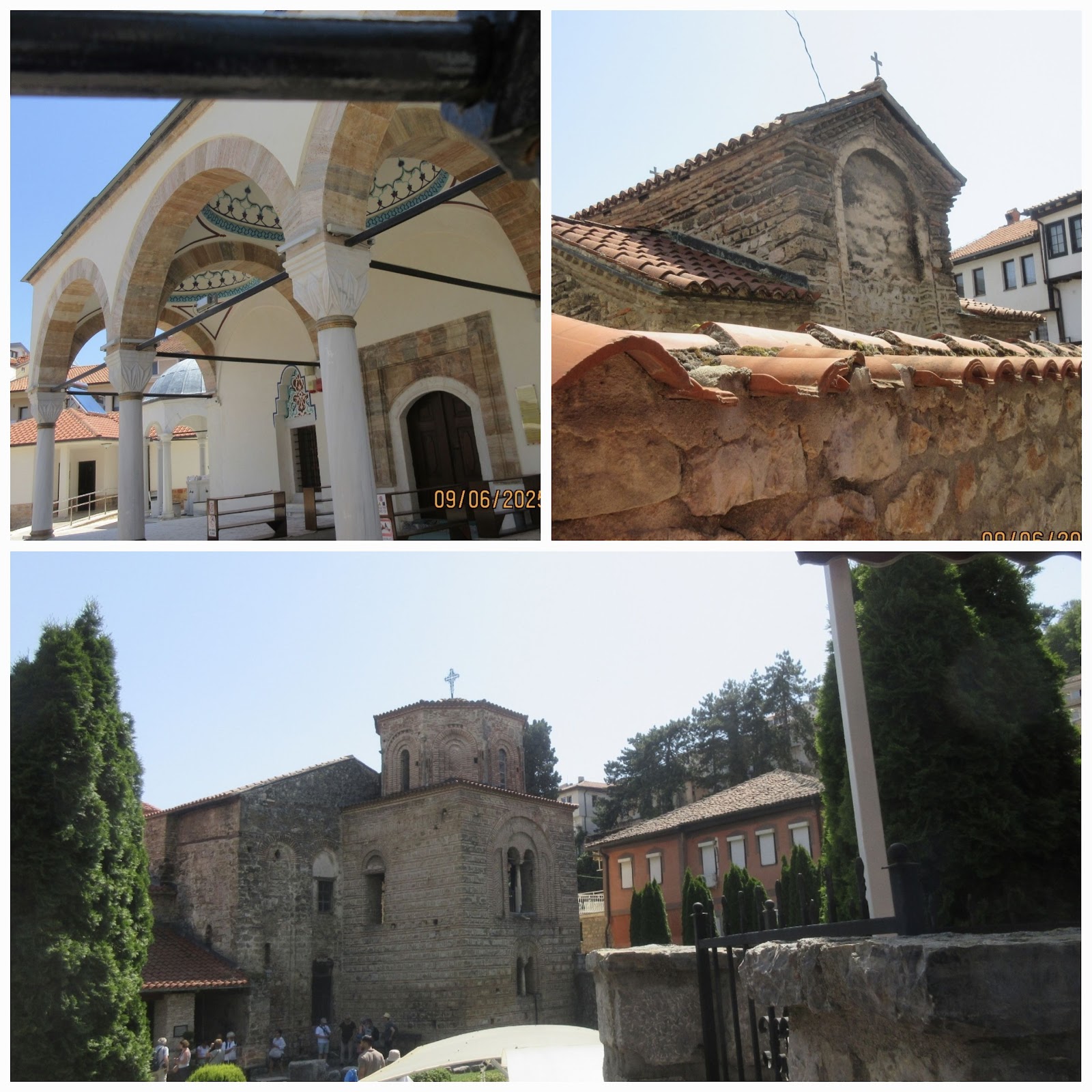
As we climb further we see crosses over the rooftops of small humble buildings. We pass by the Church of the Virgin Mary, which is one of the 365 ( one a day for the whole year)mostly tiny churches said to be in the town. Ohrid was after all a spiritual hub in the Macedonian region. Nobody's counting now.
Similar to Hagia Sophia in Istanbul
We do stop at the Church of Saint Sophia which has an old world charm. Built in the 9th century it is of Byzantine architecture with frescoes when it served as a Cathedral. Later it was transformed into a mosque. The frescoes are covered with lime. After World War 2, restoration uncovered the frescoes that are regarded as the finest examples of medieval art in the Balkans.
Hellenic: even more ancient.
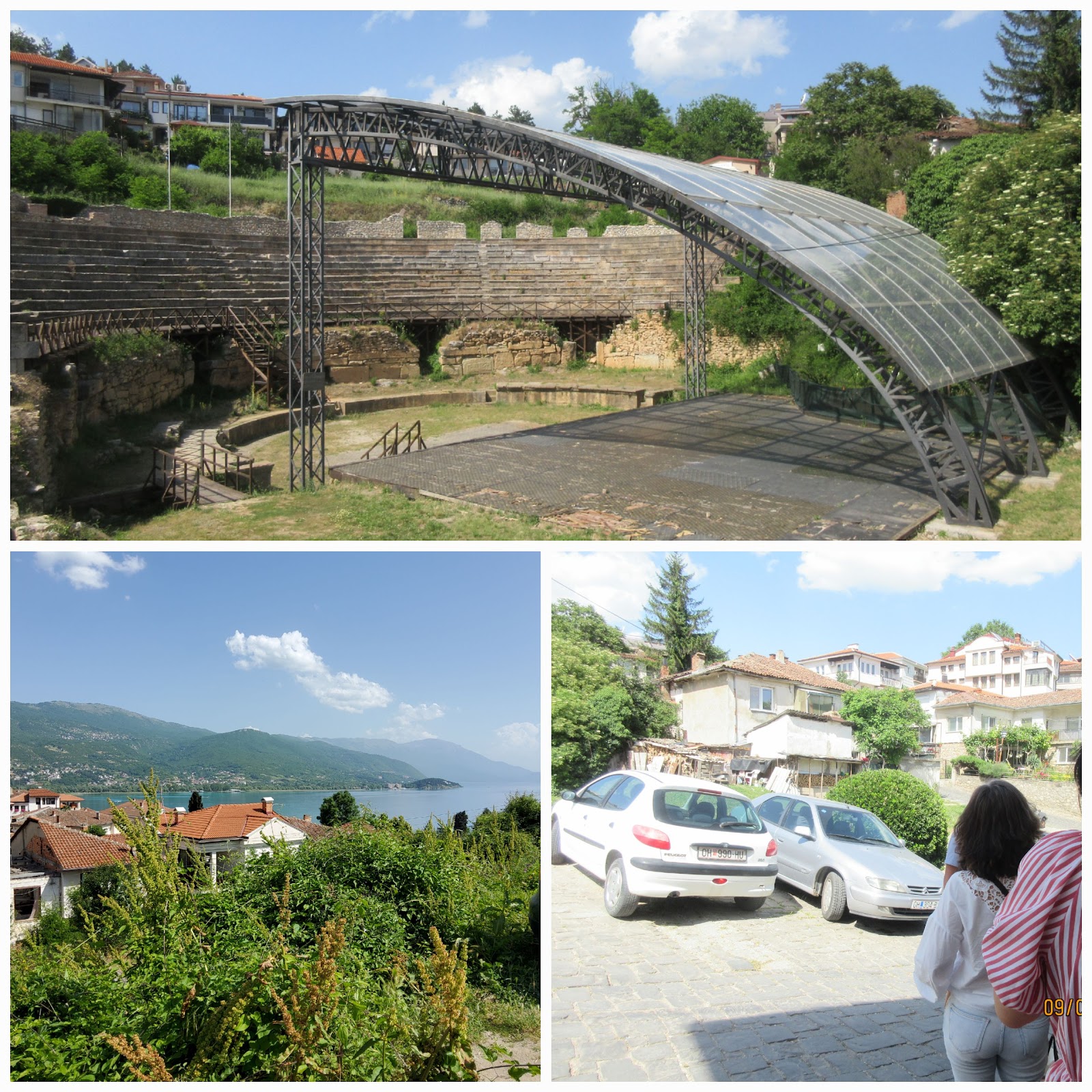
We are almost at the top of the hill. From the base of a steep incline we catch sight of an amphitheatre surrounded by two hills. This was discovered when the land was to be used for building homes. Excavation for the foundation revealed parts of the theatre. Thanks to the strict rules no buildings were allowed over it. Instead the whole theater was excavated. Probably built around the 2nd century the theatre includes a stage in the middle. The acoustics would have been fantastic since the stage was protected from the winds by the two hills. The theater had also been used for gladiator flights.
Buried for a grisly reason
The theatre was where the Romans executed the Christians. Naturally the site was highly disliked by the local residents. Subsequently it was abandoned and buried.
Panting up to a breathtaking view
The gravel road along the theatre leads to stairs above which is a newer residential area. In the distance, just above the rows of houses is a hill that flies a huge flag. This marks Samuel's Fortress. We are too limp to climb up even further for the fantastic views of the lake and the Church of Saint John at Kaneo, a picturesque gem perched on a cliff overlooking the azure waters of Lake Ohrid. Dating back to the 13th century, this small yet magnificent church is famed for its remarkable frescoes.
There are pearls and then there are pearls!
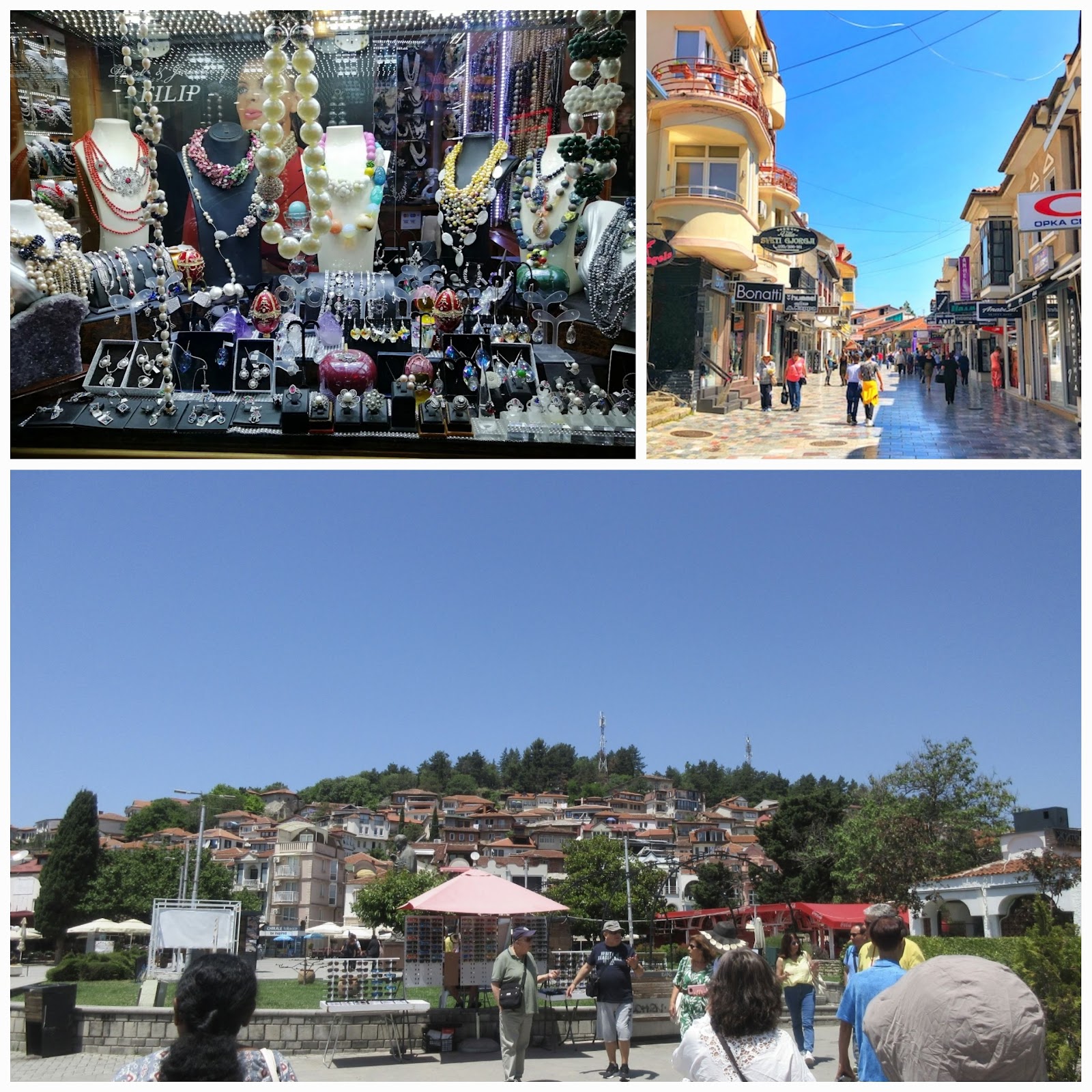
I've heard of and seen Japanese pearls, Hyderabad pearls, cultured pearls, black pearls and pink pearls. Add another to the list: the Ohrid pearl which is not at all like a regular pearl. These are made from balls of powdered shells. Then they are covered layers of an emulsion made of fish( only found in ohrid) scales. The emulsion creates the rich colours and the shine. The exact process is a secret known only to two people.
This is a Bazaar?
All that is left for us to do is to explore the bazaar, more accurately a street paved with cobblestones and bits of marble lined with souvenir shops, especially for Ohrid's unique pearls. We think it is better to have some cash on hand especially if we found a bargain. We have been told that neither the USD nor the Euro will be accepted here. Most shops do not have the means to process credit cards. And this is true of most of the Balkan countries. A cheerful man at a booth does the exchange to Macedonian Denar over the counter in a matter of mins.
The elegant pearls stand out.they are tempting. I walk in and out of several, find a few I like. But the price tags, even if they are reasonable, prevent me from buying any from the practical aspect.
‘Enlightenment’
We decide to go for ice cream in a cup for it is a scorching day and our dinner is an hour away. We find a tree just in front of the mosque and sit in its shade. Turkish ice cream is heavenly. The mosque with a prominent dome, elegant minarets, intricate carvings, and vibrant mosaics within and without is none other than the historic Ali Pasha Mosque. Besides being considered the largest mosque in Ohrid it is also a significant religious monument signifying the period of Ottoman rule.
And.. we are sitting under a 900 year old plane tree also called the cinar tree.
Grilled trout
We meet members of our group at a lakeside restaurant at the stipulated time. Our dinner is fantastic except for the dessert which looked like a cheese cake which had more cake than cheese. The grilled trout served with a squeeze of lemon, roasted potatoes and fresh vegetables helped cap the day very well indeed.
A panorama
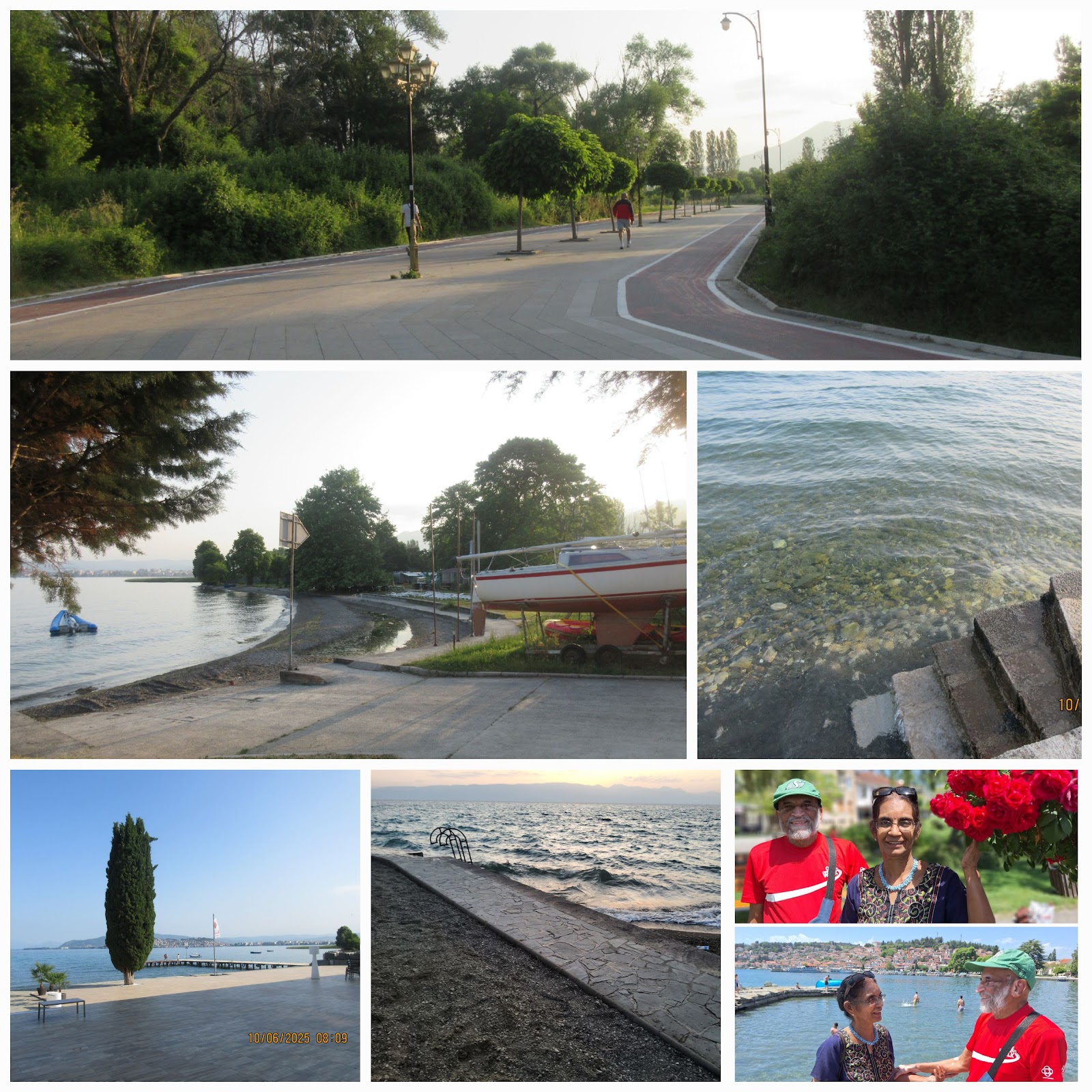
Our hotel for the night is in a quiet part of town about 20 mins away from the old town. The rooms are not great but it is on the shores of the lake. The clear waters, the waves creating plumes across the rocks. Ohrid neatly tucked away on the hills far away made for a beautiful setting. I was able to catch the vibrant sun set against the hills in the distance.
Before an excellent breakfast the next day we decide to explore the vicinity. To our delight we found a park with a broad route for joggers and cyclists. The lone cypress tree at the hotel stood like a sentinel. The previous day we had walked in the central park, filled with rose bushes and shade trees, along the shores
Trivia
The town is a UNESCO World Heritage due to its exceptional cultural and natural significance.
This fortress used to be the capital of the First Bulgarian Empire back in the 11th century. Yes, Bulgarian. Leave it to the locals to fight it out.
North Macedonia was part of Yugoslavia and only got its independence in the early 90s.
Russian script on the signboards! No, no, says the Macedonian. It was Bulgarian before it became Russian!