Showing posts with label sand dunes. Show all posts

Vung Tau to Hindu Cha(r)m: Vietnam unveiled (2)

Sun and Moon, colourful dunes


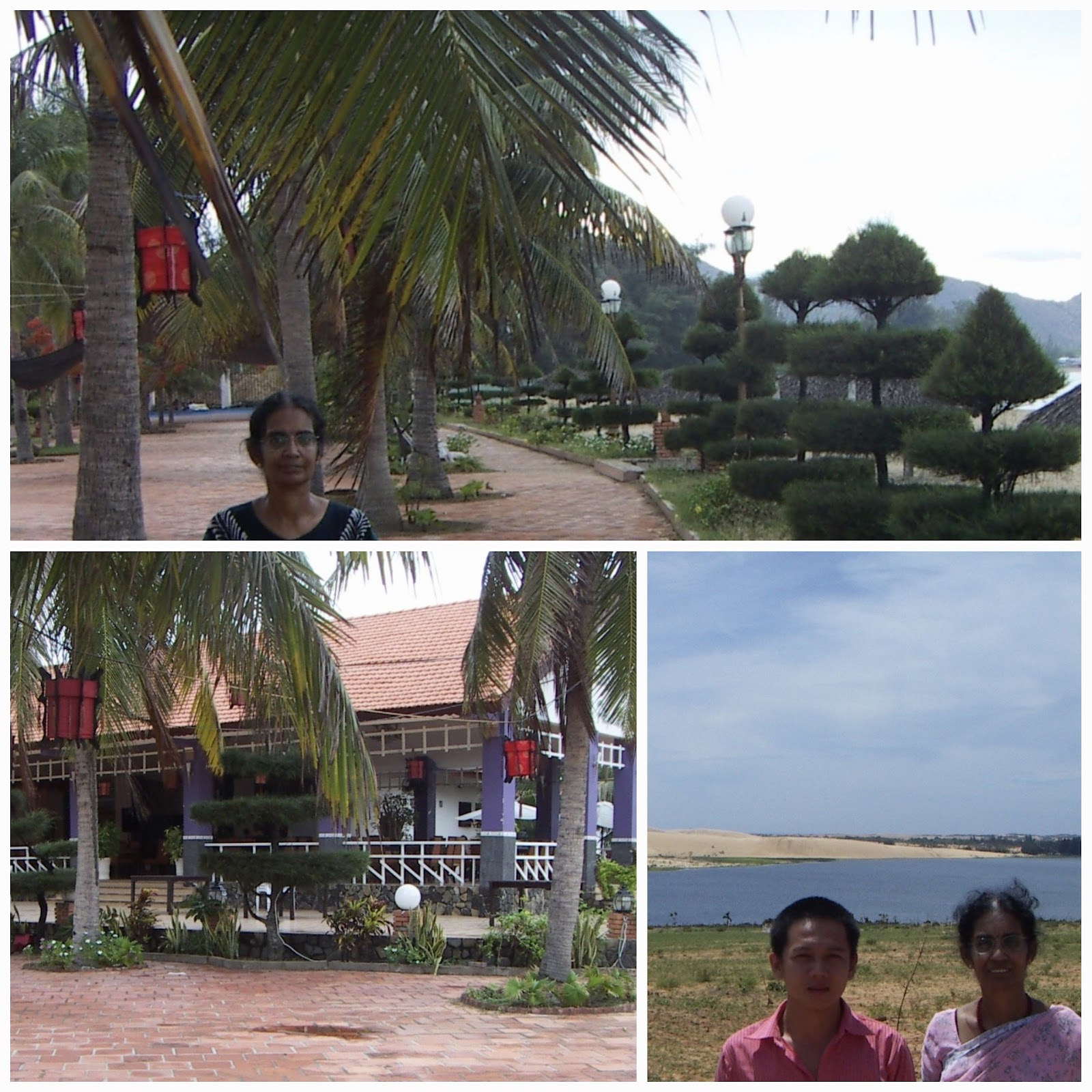
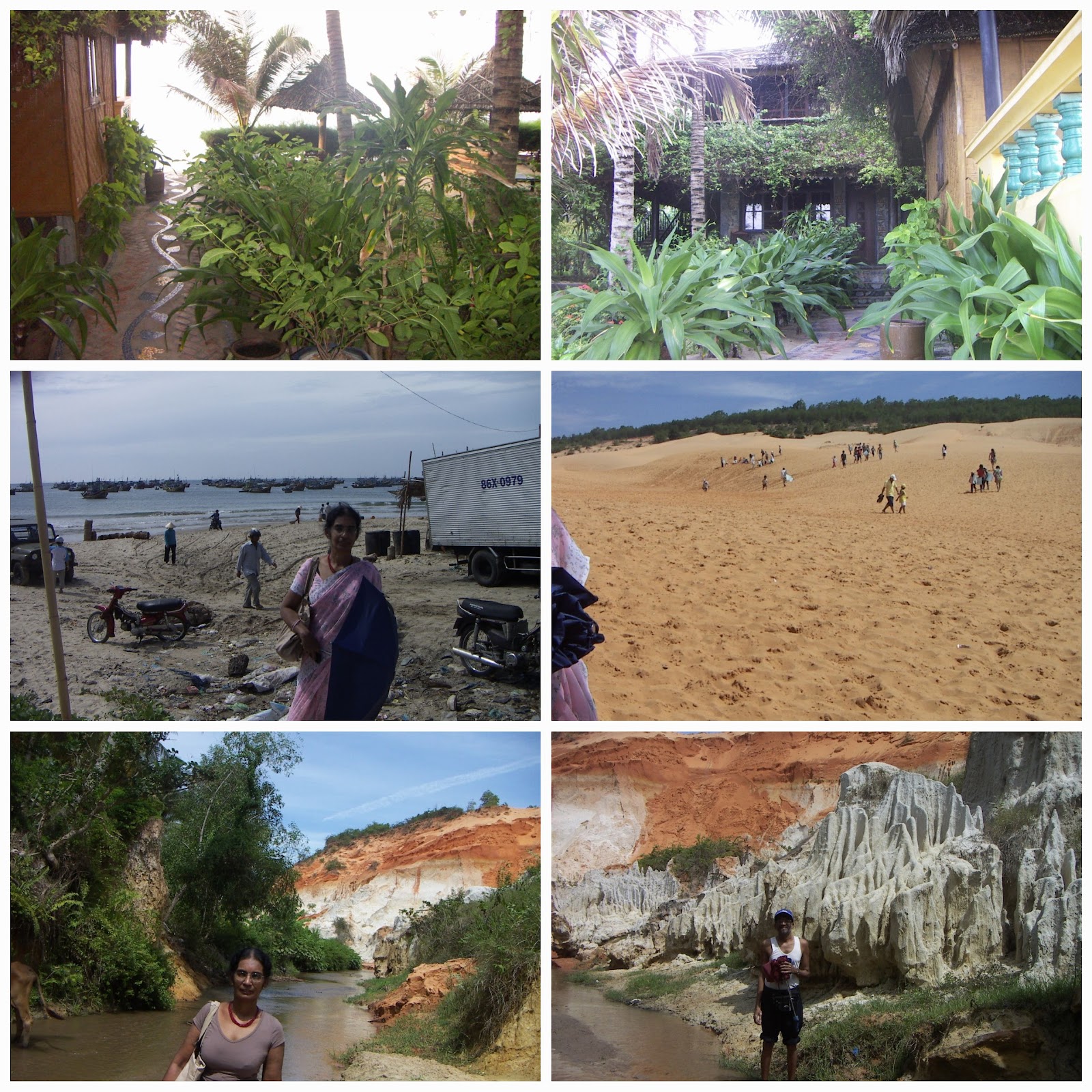
From Vung Tau we drive to Phan Thiet. We book into a hotel that promises to be idyllic. It's called Happy Moon Hotel and our room ideally opens onto the beach. After settling in for a bit we make our way to the sand dunes. The one we go to has reddish sand and in the distance appear white ones. It's a rather hot day and yet there are a few people tobogganing, teens and younger ones expressing their delight in loud laughter. 


Fried to crispness

The vendors display wide shallow baskets of little conical hills of something the colour of sand.  When we draw closer we withdraw in disbelief. They are deep-fried flying lizards, a specialty of the area! Back at the hotel we are witness to a flurry of activity. Parasailing enthusiasts ride the high waves. A satisfying barefoot walk along the beach whets our appetite. Dinner is by the ocean at Sunshine Hotel as the sunsets.


Caught in action

In the morning, as the sun rises, the beach is caught up in a frenzy of activity. we are drawn towards the  fishermen in round boats paddling over to retrieve fishing nets and trawl them onto the shore.  Women pull out fish from nets. And then, of course, come the holiday makers who are parasurfing, parasailing or abseiling.
Rolling up the pants

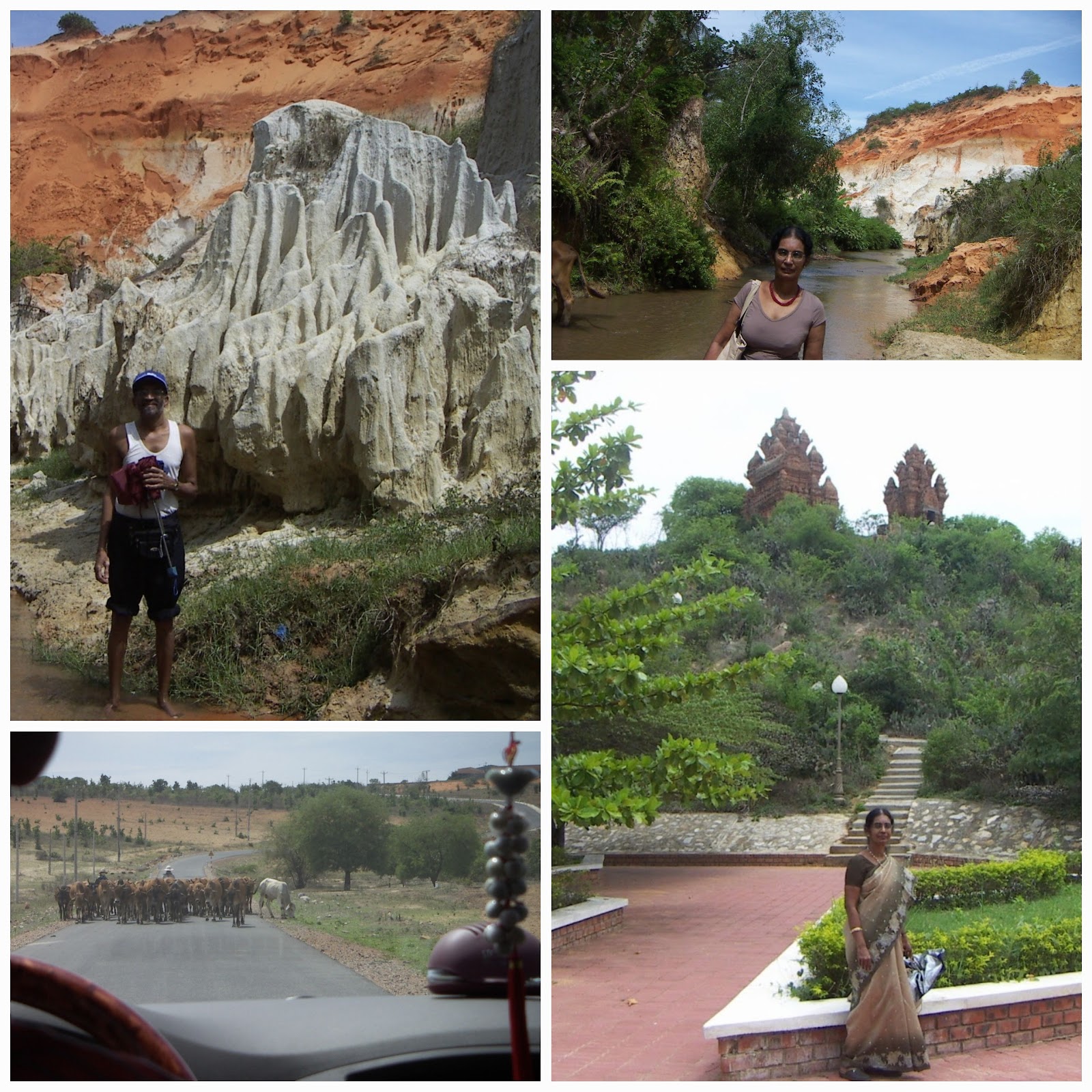
We leave Mui Ni for Dalat. On the way we stop at Phan Rang where we walk up a stream between high walls of soft pink and red rock. The stream is shallow but has a fairy tale quality not only because it flows through the red rock canyon but also because we could  it without fear of currents since the water was only knee deep at best.The naturally carved sides resemble miniature mountain landscapes that could house fairyland! We walk about a km but we do not see the promised falls. The tale of the disappearing waterfall appropriate to fairy stories, indeed. We are given a dipper of water to rinse our feet and step into our slippers which had been guarded over for a small fee.


Fishy business

As we walk back to our car we notice a yard full of vats and jars with conical covers. You guessed it right if you connected it with all the fish along the coast – vats of fish sauce all in the process of fermentation. There is only a slight whiff of the sauce as we weave between them.


Cattle herd, Sign language

We resume our road trip that winds through a patch of rough roads to a very smooth highway, passing many beaches and chalets, as well as a cattle herd that blocks our way until we reach a huge resort where we stop for lunch. First we ask for boiled water. A waiter brings a glass of water with ice in it. We try to communicate with gestures and sounds to indicate steam and scalding heat. Didn't get through. Out comes my notepad and pen. A little fire under a kettle tipping liquid into a glass. ‘ Aah’ he says. We got through!
Totally unexpected Charming Hindu/Cham edifice

All of a sudden, at a particular junction, the tops of two uniquely sculptured towers appear atop a lush hill. The car naturally follows the path to the destinatio our eyes are  naturally leading to. A beutuflly manicured serene Park invites us to the steps that would lead us to the top. It is a hot day but the discovery is so exciting that what could have been quite a discomfort has lessened by several degrees. 

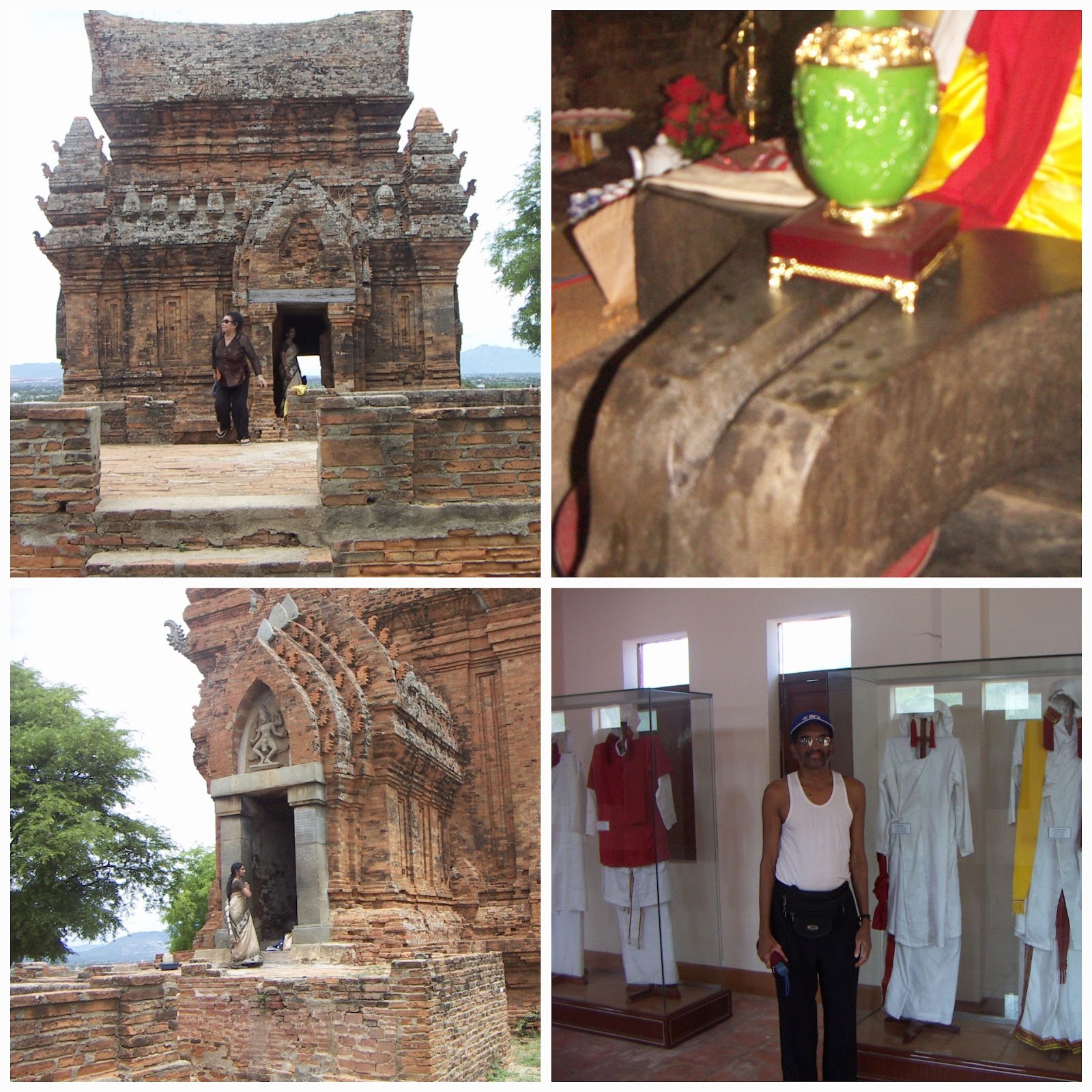
The architecture has Thai and Cambodian features and they are all derived from Hindu architecture. Over the front door of the main tower is a sculpture of the Lord Shiva that is regarded as one of the masterpieces of the modified style. The sanctum has the form of linga sitting on the pedestal that has a groove( often referred to as the phallic symbol) but unique in  that it has sculpted facial features

Even more intersting is that this religious complex is  located in the Cham principality of Panduranga, in what is now Phan Rang. Panduranga is an an Indian name prevalent in Hindu myths. 

For the Vietnamese it is Po Klong Garai Temple, a Hindu Cham built to honor of the legendary king Po Klaung Garai, who ruled Panduranga from 1151 to 1205, by the historic King Jaya Sinhavarman III (another Indian name). 


The complex also hoses some of the traditional clothes worn by yhe priests, mostly white as in Bali and India, with a touch of red or royal yellow as in Southeast Asia.


The next blog will cover the our impressions of and experiences in Ho Chi Minh (Saigon) city.


A strange phenomenon: sand dunes in the prairies


A provocative suggestion: assumptions called into question

Almost out of the blue we are asked if we'd  like to go see a sand dune. We are in Saskatoon and its summer. 

What? A sand dune in the hot summer? In the treeless prairies of all places? Are'nt the prairies known for wheat fields? Isn't this where slo-mo mechanical donkeys extract black gold? Isn't this where cattle graze? Isn't this covered in a thick blanket of snow in winter? The head scratcher has begun to gnaw at us. 


It  gets more intriguing: What's in a name?

The strangeness of it all is further beefed up as we drive through small towns. We pass by Eatonia named after Timothy Eaton, the founder of  the chain of  high-end Eatons department stores. Prophetically the next small town we pass is called Leader! And that leads us to Sceptre! A royal entrance indeed for this is where the Interpretive centre is.

Trail trial

The road to the great sand hills starts at a turn in Sceptre. We feel and hear a grinding and the wheels trying to get traction. We find ourselves  driving on loose gravel. It gets very tricky indeed. The wheels slip, throw up gravel, fling pebbles. The road has 90 degree turns  either to the right or left every few minutes which seems like ages because of the assiduous driving. Some junctions have clear directional arrow sign boards. We have lucky guesses on the unmarked ones. Confounding it all we send aflutter a horde of grass hoppers and various other insects in our path. They hop, jump and fly to save themselves from being crushed only to find themselves kamikazeing at the windshield leaving large splatters of themselves limiting our visibility.   

We then glide onto a well compacted dirt road. The flat fields of green and gold have now given way to gently undulating land. The road is flanked by shrubs and scrawny trees with their roots firmly holding the terrain together. Don't even think of driving there on rainy days.

What the dickens?

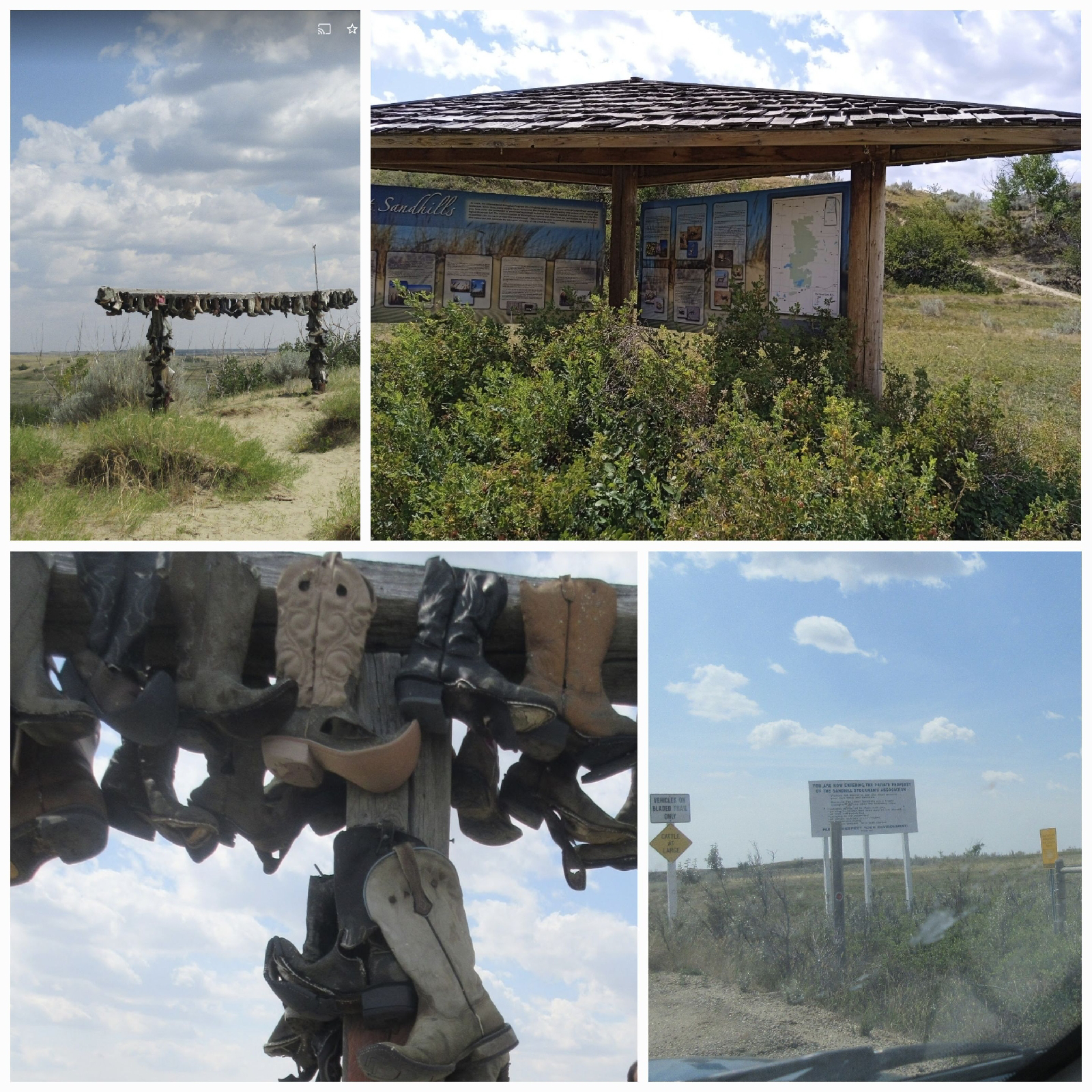
We have reached our destination. There's some sand in the fringes of the car park. Only two other vehicles are parked here. Young people are guzzling cool drinks and noshing. Raised hatchbacks reveal trunks packed with loaded coolers and sleds. We are definitely in the on-site parking lot but there are no amenities and no washrooms. 

As we get out and stretch our legs our daze clears. The first thing that catches our eye is the wooden arch  bedecked with boots, high above us. A slight turn of the head is all we need to see a dune dotted with a few people sledding down the slope. There's a lot of shrub holding it together near the foot. 

A little shelter has information  boards. We want to explore before getting into the whys and wherefors.


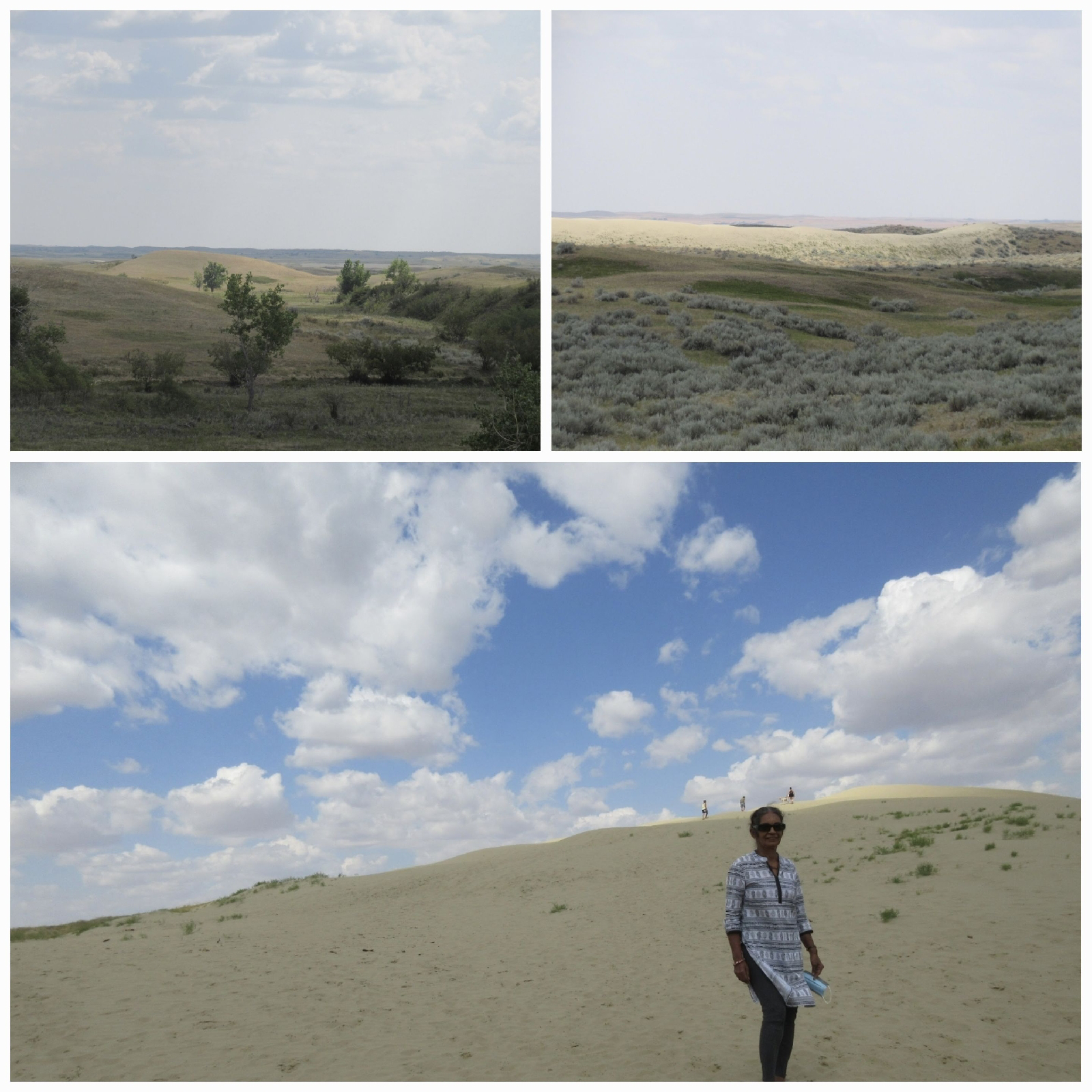
Trails are in clear sight. We take the one that goes towards the dune. It is by no means straight. As we walk we unsettle the resident  insects, sometimes inadvertently crushing them underfoot. More often, we brush them off. We climb on soft golden sand on the wind-sculted  rippled side. Following footprints left by others is by no means the best plan as we discovered in our slithering and sliding moments as we tried to gather traction. Finally we are up there, 15 meters high. That's when it hits us. We are on the nearest dune but there are so many other in the distance. Some are heavily coverd by shrubs. The skies are a beautiful blue. Usually they are dappled with cottony clouds but today? They were merciful. The clouds were huge and therefore gave us welcome cover from the heat. The descend on the leeward side is strenuous. Sliding and slithering is the norm. A tobaggon would have helped.

Where there is a trail . . .: animal instints

We first explore the archway of old boots --wooden structure  adorned worn out cowboy boots nailed onto it. It is a beautiful photo opportunity. We have a fantastic view of the nearly 2000 sq kms of active dunes in prairieland.  It also reveals trails all over the huge expanse of undulating land.

Of course, trails lead to discoveries of all sorts. Trust the animals. They know the terrain better. The cattle hooves figured it all out.  Man followed. Yes, this is private land that belongs to cattles ranchers. That explains the gravel and dirt roads, the lack of amenities,etc.  But we are winded.  No more trekking in the wilderness. 


Shifting sands: ever-changing landscape

We are aware of how sand dunes are formed, how many different types there are and that they are not exclusive to arid land closer to the equator. The hills that we saw are active ones. The sand is a shape shifter depending on the power of the winds and the amount of sand lifted , flung around and deposited. Only the shrubs that clasp the grains together mark the foundations of the dome shaped dunes that are confronted by winds from all sides. So we may have been on one that's here now gone tomorrow. To boot, dome sand dunes are  the rarest of them all.

In my post on Swakopmond,  Namibia, I wrote about the coastal dunes The Skeleton Coast in Namibia covers a field two to five kilometers long and 20 kilometer wide. 

The narrative

Now for the whys and wherefors. About 12 hundred years ago nearly all of Canada was covered in what is now known as the Laurention  Ice Sheet. When it melted? You guessed it. Saskatchewan was left with massive lakes and huge amounts of sand.

The round up from cattle land

On the way back to Saskatoon we stop at Sceptre at the Great Sandhills Museum and Heritage Centre which is closed for the weekend.


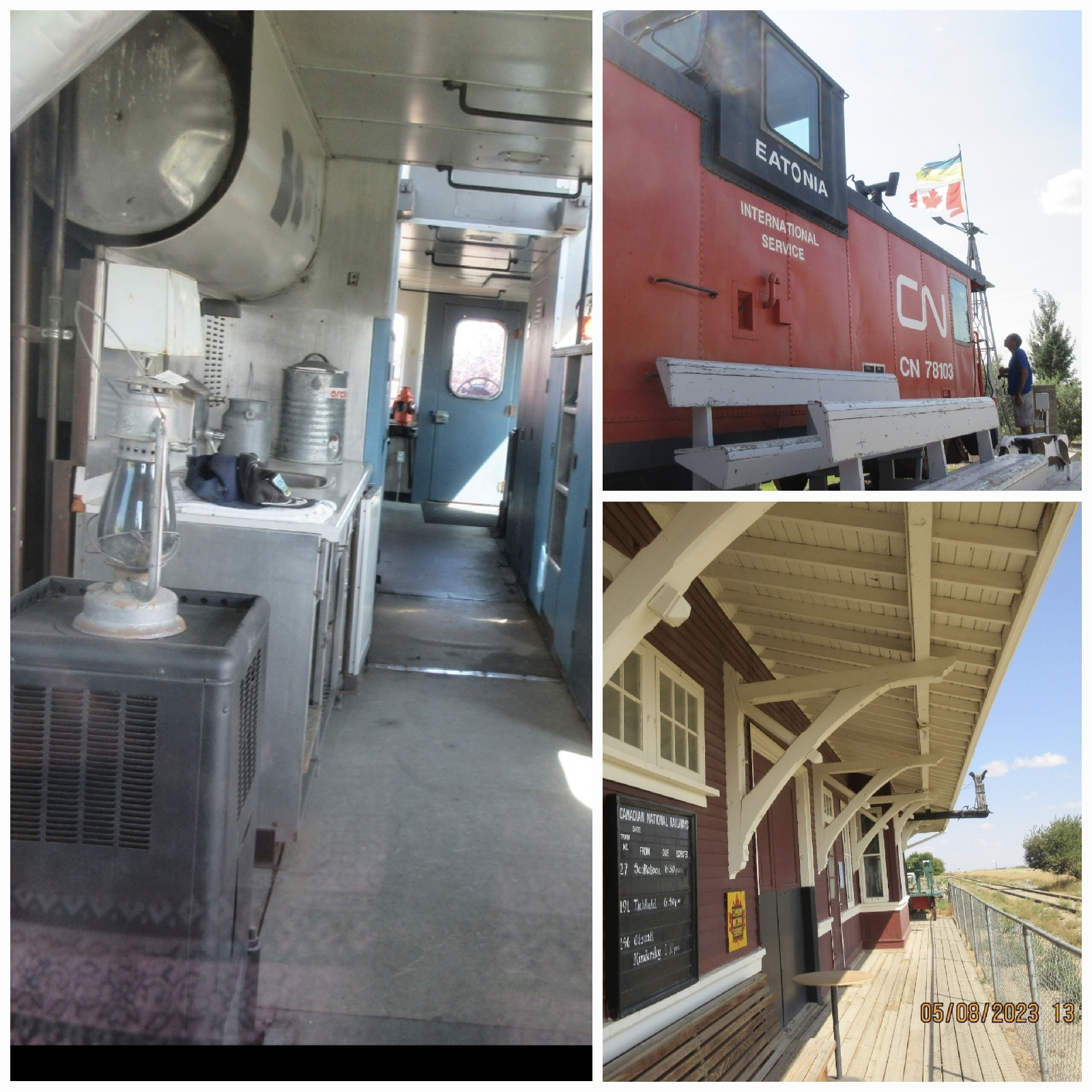
At Eatonia we are drawn to the former CN train station which  is now the Wheatland Regional Library (Eatonia Branch). The station, a caboose and a wood-frame house ordered from the Eaton's catalogue in 1917, are all part of the Eatonia Heritage Park.


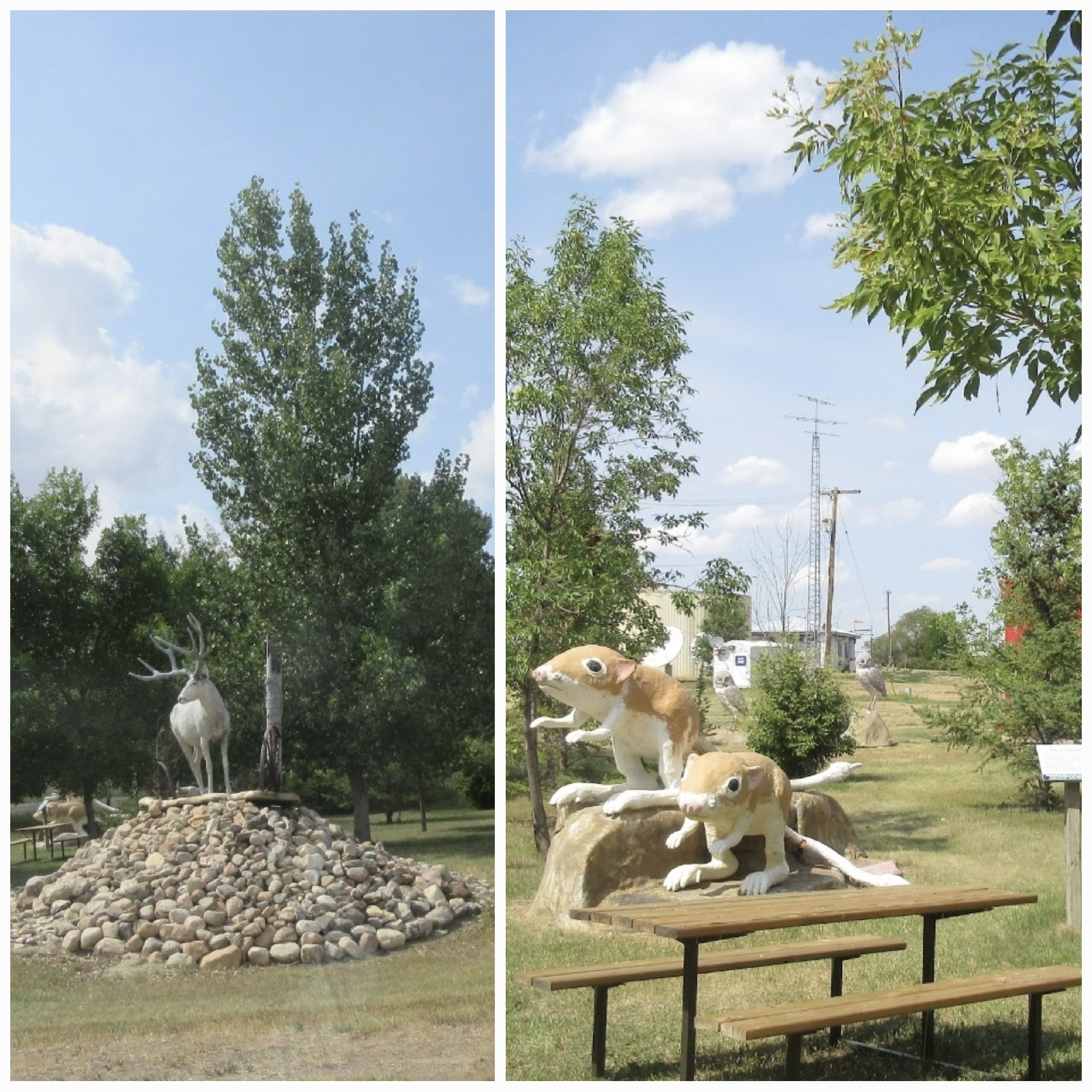
At Leader we are enticed by the park that displays models of a prehistoric animal and the local wild life.


We arrive in Saskatoon with not a single scatch on the car or crack on the windshield, head lights and tail lights intact. The only sign of having been to the dunes is the remains of and spatters made by the frenzied insects against the windshield and the radiator grill. 

Before we reach home we treat our brave vehicle to a thorough car wash, including the undercarriage.  Even after the cleaning remnants stubbornly stay on for a few months.


Le Havre, France(2): an identity

Cont'd from Le Havre, France(1):  Recovery or Restoration? The lantern whose colours speak  St. Joseph’s Church is a striking modern con...

Follow by Email